
Showing posts with label Metroid: Samus Returns. Show all posts

Friday, January 19, 2024

Nintendo Switch: Remaster & Port Wish List

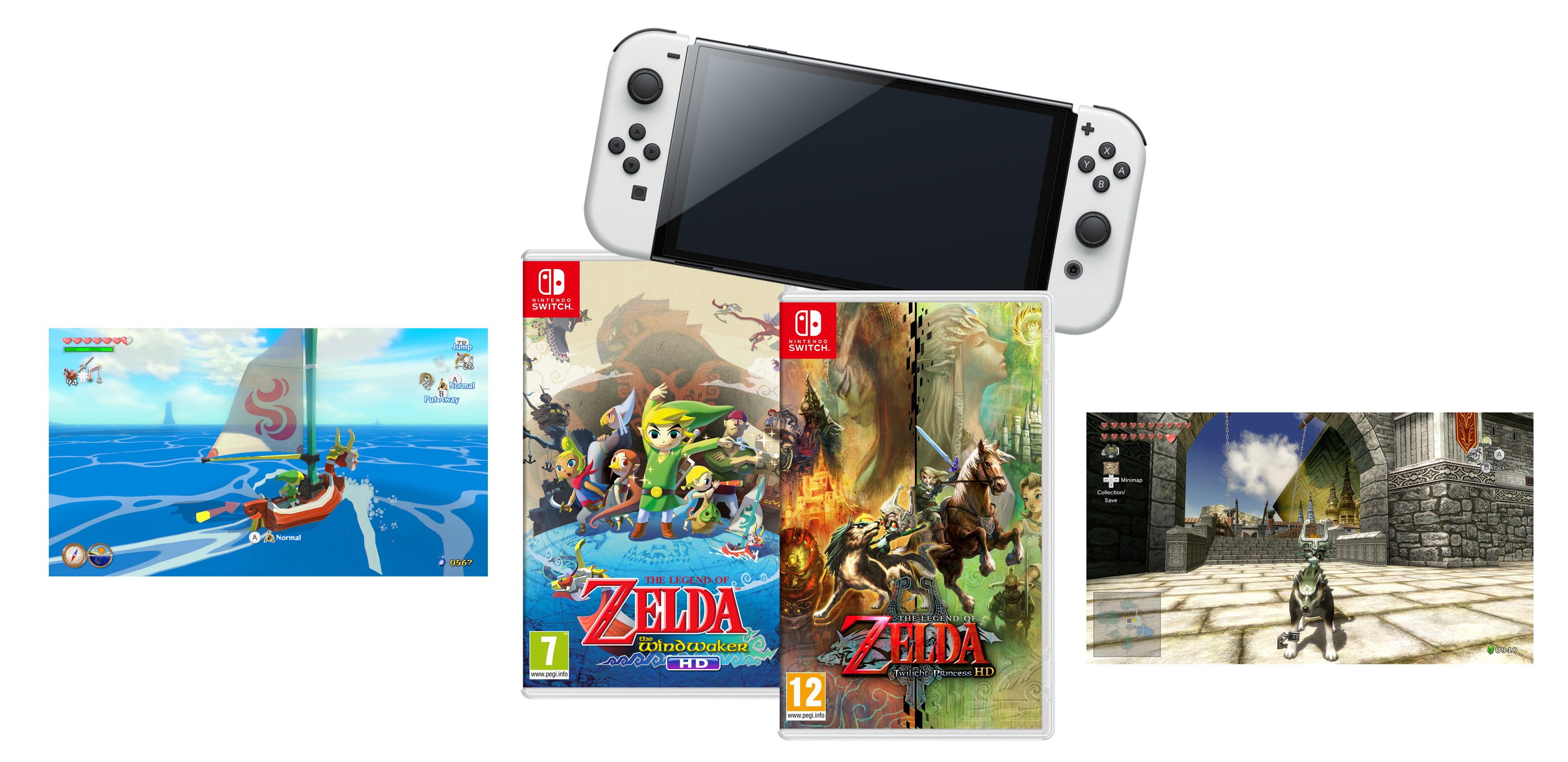
Nintendo Switch with fake box arts for The Wind Waker HD and Twilight Princess for the system

The Nintendo Switch will soon enter its eighth year and has the potential to become the best-selling video game system of all time, if Nintendo keeps it going for a little while longer. Still, they are with all certainty in the middle of preparing its successor and a number of new games for it, where it's even likely that any big titles that remain, like Metroid Prime 4, are going to be saved for the new system. In the meantime, Nintendo will tie us over with smaller titles, remakes, remasters, and ports, like Mario vs. Donkey Kong, or Luigi's Mansion 2 HD.

Now, this is going to be a wish list of ten titles, where I would still like them finding their way onto the Nintendo Switch, either for the sake of convenience or the sake of completeness. I will focus on games that can be either remastered or ported, meaning that they wouldn't need a from-scratch remake in order to look good enough. This essentially limits the choices to GameCube, Wii, Wii U, and Nintendo 3DS titles.

This can be anything previously published by Nintendo, so this won't just be about Zelda games. If you want to read more about those, check out my Future of Zelda Remakes & Remasters article, though there will be a bit of overlap here. Also, I'm perfectly aware that this post may look ironic, considering that I wrote this about six years ago. But times change and by now I really prefer having all games on my Nintendo Switch, where I rarely go back to my older Nintendo systems to play on them.


Luigi's Mansion HD

We're soon going to get Luigi's Mansion 2 HD for the Nintendo Switch, a remaster of the Nintendo 3DS title. The first game was brought onto the Nintendo 3DS as well in 2018 by GREZZO, where this could serve as the basis to later also have it remastered in the same style. With that we would have entire trilogy on the system.


The Wind Waker HD & Twilight Princess HD

These titles always have been such an obvious choice for ports from the Wii U that this kept coming up ever since the dawn of the Nintendo Switch. And after such a long time it's perfectly okay to take the last bit that the Wii U still has going for it. It would allow to play all 3D Zelda games on the Nintendo Switch, which is a big deal for those who don't own any older Nintendo consoles.

On the other hand, if Nintendo was willing to put more effort into these, then they would make great titles for the next console. Imagine Twilight Princess getting the same treatment as Metroid Prime Remastered – it would certainly make a lot of fans very happy if this were to happen over a simple port of the previous HD remaster.


Metroid Prime 2: Echoes Remastered

Speaking of Metroid Prime Remastered, it would be nice to see the sequel getting the same treatment, because it's really one of the best looking and most impressive games on the Nintendo Switch from a technical standpoint. This would serve as another filler in 2024, before we're finally getting Metroid Prime 4 and it could also be shadow-dropped in the same style as last year.

As a separate title once more, they could also put bigger focus on the multipayer mode, maybe even allow you to play it online for the first time ever. If Metroid Prime 4 also were to get multiplayer, this could serve as a play test, so to speak.


Metroid Prime 3: Corruption Remastered

At one point it will be nice to have the entire Metroid Prime trilogy on the Nintendo Switch in some form, but there may be a split here. If Metroid Prime 4 really is one of the first major games for the Nintendo Switch successor, then a remaster of Metroid Prime 3 might be something that they will keep for later, also making use of the better hardware. After all, there was a generational gap between the first two games and the third, even if it only was a slight one.


Wario Land: Shake It! / The Shake Dimension HD

This Wii game was the last entry in the Wario Land series, which is a shame, especially since it returned to its roots of Super Mario Land 3: Wario Land here, meaning that Wario won't transform whenever he gets hit by something. It is a hidden gem made by Good-Feel, the studio that would later make such cozy platformers like Kirby's Epic Yarn or Yoshi's Woolly World. Both of these got ported to the Nintendo 3DS as some of its last titles and maybe the Nintendo Switch will get a similar treatment from Good-Feel in its last years...


Donkey Kong Country Returns HD

Coming from Jump 'n' Runs and games made by Retro Studios, we move on to a combination of both, where they had revived the Donkey Kong Country series with two fantastic games. Donkey Kong Country: Tropical Freeze was already one of the first ports for the Nintendo Switch and it would be nice if its predecessor were to find its way right next to it. There was a Nintendo 3DS version, Donkey Kong Country Returns 3D, which added a couple of levels, better controls, and some helpful extras, but came at the price of the frame rate. A Nintendo Switch release therefore could become the ultimate version of the game.


Kid Icarus: Uprising HD

This was one of the early Nintendo 3DS games and the only "recent" game by Masahiro Sakurai that wasn't a Super Smash Bros. title. It was also the revival of the Kid Icarus franchise, which didn't last... But it had a number of barriers, where the biggest one were probably the controls. The whole AR card collection thingy, which was going on at the time, may also have been something to put you off. There have been rumors that Sakurai has been working on a remaster of this title, where this certainly would do it some good...


Xenoblade Chronicles X

Just for the sake of completion, to have the entire series on the Nintendo Switch, there's one more game to port over from the Wii U: Xenoblade Chronicles X. But if we're truly getting a "Xenoblade Warriors" this year, as I'm personally predicting, then this could also be something for later.


Metroid: Samus Return HD

Finally, after the success of Metroid Dread, MercurySteam may update their first Metroid title from the Nintendo 3DS for some quick cash. Well, they will probably go for another remake entirely, like Super Metroid or Metroid Fusion, or they are already working on Metroid 6. But in case that the assets for Metroid: Samus Returns already were developed in HD and only got downscaled for the Nintendo 3DS (which happened with other games, e.g. Super Smash Bros. for Nintendo 3DS), then a remaster would be a very good side project for the meantime and allow you to play this excellent game in the same glory as Metroid Dread.

Monday, April 11, 2022

Modernized Metroid Control Concepts

Super Metroid Controller Setting Mode as seen on Nintendo Switch

So, a friend of mine has been streaming Super Metroid lately, which inspired me to check out the game once more, this time via the Super Nintendo library of the Nintendo Switch Online service. Luckily, the game lets you change the controls via its options, because the emulator itself won't let you do this. Yes, something from the year 1994 is more sophisticated than a service from Nintendo in 2022, no big surprise here.

Still, I couldn't figure out something ideal and my enjoyment of the game didn't last long. I keep hearing from fans how Super Metroid is "perfect", as if there ever was a perfect game, but while it will always be one of my favorites, I personally don't feel like it has aged so well. And it's not just the button layout, the controls themselves feel very outdated, whether it's the weird wall jumps, having two buttons for diagonal aim, or the inconvenient item select. This is something that I've already struggled with while replaying Super Metroid on the Wii U, but things got much worse after playing Metroid Dread, where everything plays so much more smoothly in comparison.

Of course Metroid Dread isn't perfect either, where the controls feel somewhat overloaded, especially with the Grapple Beam, but it beats Super Metroid in most aspects. And after the success of Metroid Dread, we can safely assume that we will be getting more 2D Metroid games from MercurySteam in the upcoming years, where the game will certainly be used as a template. While it would be amazing if MercurySteam was already working on Metroid 6, another remake feels more likely at the moment and in that category Super Metroid should be the next in line.

You may have concerns about this, considering how Samus Returns turned out in certain aspects, like completely changing the final areas... But the 3DS title was a reimagining, while Super Metroid should get a proper remake, which respects absolutely everything the original did, including any glitch-free sequence breaks. There is no need to change the environments, enemy placements, upgrades, or anything like it. The only things that need to be updated are graphics, sound, and the controls. The game should simply be modernized, but not changed.

At the same time, Samus Returns would profit from something similar, where the Nintendo 3DS title could get ported over to the Nintendo Switch with updated graphics, sounds, and controls. Maybe some assets got already made in HD during the project, which would make such a remaster even more likely. People will want more Metroid for the Nintendo Switch after Metroid Dread, where such a title would be a good filler.

Metroid Dread Controls screen

Now, with all of this in mind I've kept thinking about how these two games would play on the Nintendo Switch by using Metroid Dread as a foundation. This is mainly about the controls, where all three games aren't exactly simple in that aspect... So, let's go through some potential button layouts for these titles to see how they could work on Nintendo's current system.

Of course we're just talking about the default control schemes here. All the games should follow the example of Super Metroid from the SNES and let you change the button layout as you see fit via the options menu, instead of just displaying it there (looking at you, Metroid Dread).


Core Controls

For the sake of consistency, the following should probably be the same for all three titles:

  • Y: Shoot
  • B: Jump
  • X: Melee Counter*
  • L: Free Aim
  • R: Missile Mode / Power Bombs
  • ZR: Grapple Beam
  • Plus: Map
  • Minus: Options
  • Left: Expand Minimap
  • Right: Scan

*It's questionable whether MercurySteam should implement the Melee Counter in a Super Metroid remake as well, but let's not get into this for now, so you can ignore this for that case.

Both Super Metroid and Samus Returns would also need a button for swapping weapons, mainly for changing between Missiles and Super Missiles, where the most convenient choice would be the A button. This one was used for the Flash Shift in Metroid Dread, but there is nothing similar in the other two games.


Super Metroid

  • A: Select Missiles
  • ZL: Dash
  • Left Stick Button: Morph Ball
  • Right: X-Ray Scope
  • Right Stick: beam selection

The SNES title was the only Metroid game that has a dedicated dash button. And not going to lie, using this still feels good. Technically, they could get rid of this by simply using the analogue stick analogously. So, if you don't want to run, you don't press the stick all the way. And the Speed Booster could be activated by pressing the left stick, exactly like in Metroid Dread. But if we go with a dedicated dash button, then the most comfortable choice will probably be ZL, so you can still shoot and jump while dashing.

Overall, the most important thing would simplifying the entire item selection system. This wasn't streamlined in Super Metroid at all, where it can adopt basically everything its successors have improved. Missiles and Power Bombs should be activated by holding R. Grapple Beam can be used by holding ZR. The X-Ray Scope should be activated with the same button as the Pulse Radar, where it then goes into the scope mode, which can be left at any time by pressing Fire or Jump. So, all that's left is switching between normal Missiles and Super Missiles, where this should go to A or X for the best access during combat.

Super Metroid also has a series of special Charge Beam attacks, which could be triggered when Power Bombs were selected and the Charge Beam was equipped with only one of the other four beam upgrades. Since most players never change their beam setup, those techniques are fairly unknown, where a remake could make this more accessible by offering a beam selection similar to that in Metroid Prime. Each direction of the right analogue stick would equip the Charge Beam together with either the Ice Beam, Wave Beam, Spazer Beam, or Plasma Beam respectively. Pressing the stick button would equip all beams at once (a remake will most likely allow the combination of Spazer and Plasma). If you charge and hold the R button during release, it will then fire the "Charge Beam Combo".

Needless to say that certain actions, like Wall Jumps, Space Jumps, or using the Grapple Beam, should work as fluidly as in Metroid Dread, which means that the inputs should feel more intuitive and natural. At the same time a remake should preserve what was possible in the original, e.g. single-side wall jumps, which wasn't a thing in any of the later games.

It could also be interesting to have a ledge grab, which would offer a variety of additional possibilities. But this should probably added via a new hidden item, like the Power Grip in Zero Mission, only optional, to respect Samus's original abilities in Super Metroid (even though they didn't really care about that with Samus Returns).


Samus Returns

  • A: Select Missiles / Beam
  • ZL: Morph Ball
  • Right: Scan Pulse
  • Right Stick: Hazard Shield / Beam Burst
  • Stick Buttons: Phase Drift

Since Metroid Dread and Samus Returns were made by the same developers, the controls are already quite similar. However, there is no second screen with the Nintendo Switch, which on the Nintendo 3DS mainly let you switch between the different weapons. The Grapple Beam gets taken out of this equation thanks to the ZR button, while switching to the Ice Beam and Super Missiles would best work via the A button. The touchscreen could also be used for the instant Morph Ball mode, where now there is the ZL button for that, just like in Metroid Dread.

The one thing that truly has to change is the activation of the Aeion abilities, where previously you would select an ability via the D-pad and then activate it with the A button, which we now need otherwise. Most of the Aeion abilities were toggles, however, like putting on the Hazard Shield, which absorbs any damage at the cost of Aeion. So, there is no real need to pre-select them and bind their usage to a button, where this was already somewhat inconvenient while playing the Nintendo 3DS title and could be improved here. Just flip the right analogue stick either left or right for the Hazard Shield and Beam Burst respectively. The Phase Drift then can go to one of the stick buttons, where this would be like the Phantom Cloak in Metroid Dread. And of course the Scan Pulse should work exactly like the Pulse Radar.

The Melee Counter could also be enhanced like in Metroid Dread, so that it works while jumping and running. This would improve some of the game's pacing significantly.

Sunday, April 15, 2018

Metroid: Samus Returns Revisited


For the last two weeks I've been traveling quite a lot and since Nintendo's Smartphone games don't work without a solid internet connection, I had to resort to my Nintendo 3DS, where I was in the mood to play Samus Returns again.

For my review last September I've played through the game in both the Normal and Fusion Mode difficulties. This time I opted for a Hard Mode playthrough, where I followed two rules:

  1. No Scan Pulses
  2. No Backtracking before the end of the game

The only exception to the second rule would be revisiting the Surface area once before facing the Metroid Queen to complete the map there with Space Jumps, which isn't possible anymore, as soon as you are in company of the Baby Metroid.

But this gave me a lot of time with the baby, where for the first time I could take some of the shortcuts that it provides for obtaining various power-ups. I also scored the second best "ending" in Hard Mode with a time of 7:40, which leaves a lot of room for improvements. But I wasn't speedrunning, I was playing more casually and I also had the goal of completing the entire map without any Scan Pulses, which wasted quite some time.

When filling out the map, the game can be a little annoying, because there are many squares, where you often have to touch some weird corners either by jumping against the right spot or by using the Spider Ball. So, sometimes for one little spot on the screen it creates an entire square on your map, which caused quite some short-notice backtracking on my end. "Oops, I missed some weird corner again."

On the long run I want to unlock all nine ending eventually, but beating the game under 4 hours will require a lot of practice and perfect knowledge of the game world.

At least I enjoy replaying the game a lot. It might even become the Metroid game with the highest replay value for me and it will certainly replace Super Metroid and Other M on that regard, the two Metroid games I've beaten the most so far. It just has the fast paced and smooth gameplay that I enjoy about Other M, but it's a lot closer to the classic Super Metroid gameplay, where the SNES game sadly feels very sluggish with its controls from today's standards.


Samus Returns is quite linear with its strict area-by-area approach, but most Metroid games follow this approach, some are just better at hiding it than others or offer some weird sequence breaks as compensation. But the areas of SR388 themselves usually feel quite open and the game doesn't have this "in your face" linearity of Metroid Fusion or Other M, where you're always told where to go. There's also no forced backtracking to previous areas, which was super confusing in some of the Metroid Prime titles. All of the backtracking is just there for you to discover more hidden power-ups.

Already with the GameBoy Classic I thought that the approach of killing all Metroids within one area to proceed felt quite smart. And Samus Returns really did a good job of developing this formula into a game that has a nice flow. I enjoy it a lot and this certainly wasn't the last time that I've played through this game.

Saturday, September 30, 2017

Metroid: Samus Returns (Review)


Metroid is back! After completing Samus Returns in both Normal and Fusion Mode, it's time to give the newest entry in the franchise a little review.

It's the first traditional side-scrolling Metroid experience since Zero Mission in 2004, which was a remake of the first Metroid game on the GameBoy Advance. And because Metroid II - Return of Samus always felt quite similar to the first game, it was only a matter of time, until we would see a remake of the GameBoy classic as well. In fact last year, for the 30th Anniversary of Metroid, the fan project Another Metroid 2 Remake aimed to deliver the same thing, but now we've gotten the official version developed by MercurySteam and produced by Yoshio Sakamoto, who hasn't touched the franchise since Metroid: Other M in 2010, which wasn't received all that well.

So, it has been seven years since the last main Metroid game and after Metroid Prime: Federation Force, which was released last year, the Nintendo 3DS again proves to be the platform where Metroid finally returns. And in this case it worked out really well. The graphics look pretty nice and the 3D helps you to distinguish between what's important and what's in the background, which offers lots of interesting world details. It's the kind of 3DS game where you want the 3D to be turned on all the time, similar to A Link Between Worlds.


For this the entire upper screen has been kept clear and all the typical HUD elements were moved to the touchscreen, where you can also view the map at all times and switch between weapon types. Only downside is that the game seems to run at 30fps only.


Music and sound are quite good as well, but don't provide the top-notch quality that you would expect from a Nintendo game. For what it's worth, they managed to mix the ambient tracks of the GameBoy classic into some atmospheric new music pieces, which is quite awesome, but at the same time they just recycled some music from the Metroid Prime Trilogy for some low effort. It's still quite a good soundtrack overall and even offers some fine new tunes. However, some sound effects, like those of the new Teleport Stations, have an acoustic noise to them, which makes listening to the game not always that pleasant. But for the most part it's pretty great.

What's probably more important than how the game looks and sounds, is how it plays. And the controls might take some time before you get used to them. You can toggle between Free Aim and Missiles Mode with the L and R shoulder buttons, you can (de)activate the four new Aeion abilities with A, which you select with the D-Pad at beforehand. You shoot with Y, you jump with B and you use the new Melee Counter with X. You also switch between weapon types with the touchscreen, while touching the map makes you instantly go into Morph Ball mode, where otherwise you would need to crouch first. It all feels quite convoluted in the beginning, where it's easy to confuse things with all the necessary toggling. But the more you play, the more you get a feel for  why the controls are the way they are and learn to appreciate them. Still, some options for the controls would have been nice. And for New Nintendo 3DS owners they should have utilized the ZL and ZR buttons in some way, for example for the instant Morph Ball.

In the very least the game plays very smoothly. Especially Wall Jumps and Space Jumps were never as easy to perform, which almost makes you wish that Super Metroid will get a remake next. Even the Grapple Beam works very well in a way, where you never actually have to manually switch to the beam. Aiming at something where the Grapple Beam can attach to it will automatically activate it (your laser sight will then be blue to signal this).

Let's get more into detail with what's new here. With the Free Aim you can utilize the 360° precision of the Slide Pad for the cost of your mobility. A laser sight makes it easy to find your target and it even turns red then (or blue for grapple objects, as aforementioned). In boss fights it's a somewhat of a "risk vs. reward" mechanic, because it makes it easier for you to hit the designated weak spots, but it will also be easier for the boss to hit you, while you're standing still on the ground. And there are many boss fights in this game where this plays a role.


The Melee Counter also sounds like a good addition on the paper. Enemies running into you can be quite the annoyance (which was especially problematic in Another Metroid 2 Remake), where this new move seems to be perfect answer. Problem is that the Melee Counter suffers from a similar illness how Skyward Sword treated its motion controls. Now, almost all the enemies, even small crawlers, charge into you. They blink right before the charge attack to signalize that now it's time to use your Melee Counter, where this whole technique feels more like a quick time event than a proper addition to Samus' fighting skills. And if you screw up, you get hurt badly. This is quite annoying in the beginning, but it gets better later in the game, where your attacks get so strong that you can quickly take out enemies, before they can even charge. And with the bosses it's often treated as another "risk vs. reward" mechanic, where it's easier to dodge their melee attacks with jumps, but facing them might result in a cool action sequence, where Samus blasts the hell out of her enemies in close combat.

Completely new are also the four Aeion Abilities - Scan Pulse, Lightning Armor, Beam Burst and Phase Drift. They all consume so called "Aeion", an energy refilled via yellow orbs that you get from successfully fighting enemies. Scan Pulse uncovers a nine-by-nine area on your map around you and reveals hidden secrets, as well as breakable blocks on your upper screen. It's kind of a more practical version of the X-Ray Scope from Super Metroid, where you also won't need maps from the internet anymore to find everything. Any scanned area will be permanently marked on your map, though, so some players might want to have scanned every possible square, while others might want to avoid to use the Scan Pulse at all.


The Lightning Armor and Beam Burst offer the typical defensive and offensive upgrades, which you often find in games like this (e.g. different Armor, Magic Rings or Spirit abilities in Zelda games). Here you can use both at the same time and sometimes it's even necessary to use them to get through hazardous environments or to deal with tough enemies that otherwise can only be damaged with powerful weapons that you might not even have yet.

Last and maybe least there's also the "Phase Drift", which rapidly consumes your Aeion to slow down time. Primarily this gets used for puzzles with those breakable blocks that no one really liked in any Metroid game ever. In this way it's even a fine mechanic, because you finally have a way to successfully deal with these blocks without them being totally annoying. But because of that you will face more of these blocks than ever before at the cost of your Aeion. Luckily, often there's a Big Aeion Orb nearby, which completely refills your Aeion Meter, so you can try again right away.

That's really it for new things that got introduced to the series. Similar to Zero Mission, Samus Returns also adds a couple of staple items, which weren't present in the original GameBoy game – the Grapple Beam, Super Missiles, Power Bombs and the Gravity Suit. The Wave, Spazer and Plasma Beams now also stack, while the Ice Beam is kept a separate tool next to the Grapple Beam, which you have to select via the touchscreen. This does make sense at first, but it feels a little useless later in the game, where freezing enemies doesn't help much and Missiles tend to be more effective against the stronger Metroid variants.

Surprisingly, the Speed Booster doesn't make a return here. It essentially got replaced by the Phase Drift, while there's also a new hidden technique to emulate a Ballspark, where you have to combine the Spider Ball with Power Bombs. It's much easier to perform and it feels like a blessing that you don't have to pull of all those finger acrobatics anymore that were required for some expansions in Zero Mission. But this trick isn't documented in the game anywhere and there are no funny animals around to teach it to you, so some players might even expect at first that the Speed Booster is still hidden somewhere...

By the way, the Spider Ball feels so good and useful in this game that it's almost a shame that it never was present in any of the other 2D Metroid games.

Even with some small flaws here and there, overall this game plays quite well and offers the classic Metroid experience that you'd want. But MercurySteam also did quite a good job at translating the world of SR388 into something more, while at the same time staying mostly faithful to the GameBoy classic. It feels like a much larger world now, but at the core you are able to recognize the different areas from the original and it follows the linear design, where you move from one area to the next, hunting down all the Metroids in one area.

It's just much more fleshed out and it also adds new lava and under water sections, which Metroid II - Return of Samus didn't have. In there classic music pieces from Super Metroid are played, which is all quite nice, but it feels about as original as adding the Gravity Suit along with it. Some of the later areas also feel a little bit too different from their originals, where even some of the environmental story telling is lost in translation, but the remake was very busy with adding many new details of its own, especially in the beautiful backgrounds.

Unlike the original game there's also quite some backtracking involved, but it introduced the new Teleport Stations to make it easier to move between the different areas. A similar comfort has been offered by the Gunship ports in Metroid Prime 3: Corruption, but overall this has the potential to become a new staple in the series and makes you wonder, why Metroid games didn't have this before.

A big part of what made Metroid II - Return of Samus special within the series were the enemies, especially experiencing the full life cycle of the eponymous Metroid creature. And from the basic Hornoads up to the Metroid Queen the enemies of SR388 surely have evolved quite a lot, all offering new attacks and plenty of surprises. For example the Autoad robot enemies actually feel threatening in this game, because they emit a blast that temporarily disables your Aeion. And of course the different Metroid are much more threatening in the remake and assault you with various fire attacks for example.


They also introduced the new Diggernaut boss enemy, which has an amazing build-up and offers a crazy fight, where you really have to master all the individual steps. But it's quite satisfying, if you finally manage to beat this boss on all difficulties.

But that's not all, similar to Zero Mission they added a little something to the game to extend the experience...


Completing the game is also not all that convoluted than it was in Zero Mission. From the beginning on you can see the completion percentage for every individual area, while the different endings are entirely based on your time, but not the completion rate. The latter unlocks a gallery with "Chozo Memories" piece by piece and that's really it.

Additional galleries and the "Fusion Mode" difficulty have to be unlocked via amiibo after the game was beaten once. And that is certainly one of the bigger amiibo scams that Nintendo tried over the years, because normally you would expect such features to be unlocked without the necessity of tracking down four different amiibo figurines. There's a "Hard Mode" unlocked for everyone else, but in Fusion Mode enemies deal even more damage and you get to play in the Fusion Suit from Metroid Fusion.


Conclusion

Samus Returns is a return to form for the Metroid series. MercurySteam did a good job of translating the GameBoy classic onto the Nintendo 3DS and added everything to make it the full 2D Metroid experience that fans would want. There are some rough edges here and there, but it offers the playability and the replay value of a very good Metroid game.

It also will make you long for more and luckily it even teases potential new Metroid titles (more about that later on), where we can only hope that MercurySteam is already onto the job.

Friday, September 15, 2017

Got the Metroid Samus Returns Legacy Edition & amiibo

It's another of these days... When a package full of new Nintendo stuff arrives and it feels like Christmas. The only difference is that it was actually containing Metroid goodies, instead of the usual Zelda merchandise:


I was actually lucky to reserve all these items on Amazon Germany, but this cost me quite a lot, because they seem to piss on their "Best Price" policy these days and just stick to the placeholders. It cost me a total of 140€, while it should have been 100€ tops. But the Legacy Edition cost 100€ alone, which it definitely isn't worth it, and then 20€ for each amiibo. But it seems that Amazon likes to make some profit out of all the rarity as well.

Anyway, the Legacy Edition is quite nice, especially if you're a fan of the GameBoy classic. It's not worth 100€ (maybe 70€ tops), because it only contains the usual penny-ante stuff: a keychain, a pin, a steelcase that looks like the original GameBoy module, an artbook and the soundtrack. Oh, and there's a code for the Virtual Console classic game as well:


The amiibo are really nice. I was never a big fan of amiibo figurines and the practices behind them, but those two figurines are certainly worth it:


They look very nice, they have a nice weight to them and the Metroid is made out of squishy, transparent rubber, which is pretty awesome and offers something different. Those are certainly my favorites next to the Guardian amiibo from Breath of the Wild.

I also found out something "exciting" about the Metroid amiibo, something Nintendo hasn't even advertised anywhere. But more about this in a few minutes!

Monday, July 24, 2017

Metroid: Samus Returns - amiibo Functionality Revealed


The four different Metroid amiibo will have two different functions in Metroid: Samus Returns. Ingame they will offer you Reserve Tanks and other cheats:

  • Samus (Smash Bros.): Missile Reserve Tank
  • Zero Suit Samus (Smash Bros.): Energy Reserve Tank
  • Samus: Aeion Reserve Tank
  • Metroid: reveals nearest Metroid location

It's not known, if there are any limitations to this, e.g. if you can keep replenishing the Reserve Tanks or if this only works once per day like almost all amiibo in Breath of the Wild. But considering that those are supposed to be Reserve Tanks, where you most likely won't be able to scan the amiibo in the middle of a fight, you can probably just keep filling the Reserve Tanks, whenever you're out of danger.

In addition the amiibo unlock new features within the main menu, after you've completed the game once:

  • Samus amiibo (Smash Bros.): Concept Art Gallery
  • Zero Suit Samus (Smash Bros.): Sound Test
  • Samus: Metroid II Art Gallery
  • Metroid: Fusion Mode

Fusion Mode is a higher difficulty like Hard Mode or Hype Mode, but you're wearing the Fusion Suit from Metroid Fusion, which also used to be a feature in Metroid Prime, if you linked the game with Metroid Fusion (or purchased it in the Extras Gallery of the Metroid Prime Trilogy).

However, all of this leaves a sour taste. The cheats are fine and seem like typical amiibo behavior these days, but unlocking galleries and higher difficulties always used to be something that you did by beating a Metroid game, which is still a requirement here. But now you will also have to track down and scan figurines to do this, which feels like a rip-off. Both amiibo and DLC shouldn't lock existing content in a game, they should add to the experience in another way...


Source: Nintendo.co.uk

Thursday, June 22, 2017

Metroid: Samus Returns - Legacy Edition Pictured

So, we're getting this in Europe:


Steelbook that looks like a GameBoy module of Metroid II - Return of Samus, a Virtual Console copy of said game, Morphball key-chain, Screw Attack pin, artbook and the soundtrack from the North American Special Edition. Looks nice, definitely getting this!

This also balances the fact that we didn't get the Master Edition of Breath of the Wild in Europe. But overall everyone would be happier, if the Special Editions were the same in all regions. Because as it is right now one region will always be jealous of the other.

But Nintendo seems to have lots and lots of problems these days with providing the fans with the goods. It's getting quite frustrating to be a Nintendo fan and collector.

Tuesday, June 13, 2017

Metroid: Samus Returns Announced


Watch the trailer here and the Treehouse Live segment here.

This was a welcome surprise for Metroid fans next to the announcement of Metroid Prime 4. And this will already be available September 15th in Europe and get two nice amiibo and a Special Edition with a soundtrack (the European version even gets more extras).

I personally had envisioned a 2.5D Metroid game for Nintendo 3DS for the longest time now. Last August in my Future of Metroid article I also described, how Nintendo could remake Metroid II - Return of Samus in the style of Metroid: Other M. And now it looks like I'm getting all of this.

This also explains, why Nintendo took measures against the fangame AM2R, because these projects are very similar. I can still advise every Metroid fan to try it out, if you can still find it on the internet, because it's really well done. But from what I've seen I'll probably like Metroid: Samus Returns even more.


It feels more like a real Nintendo product, despite it being developed by MercurySteam. But they are doing a good job here and even seems like they were reacting to some issues that have arisen with AM2R. One of the biggest problems of the fangame was how most damage is dealt by enemies running into you. And the melee counter attack is such a nice answer to this! The fights look a lot more dynamic and the different Metroid stages so much more threatening. The Gamma Metroid shows a lot of new tricks (it can even walk around), while the Zeta Metroid seems to be on a similar level to the Omega Metroids in AM2R.

I also find the "Aeion Abilities" intriguing and I like, how they improved the SR388 world design with teleport chambers and alike. It really feels like a proper remake by Nintendo standards. AM2R was still great and I enjoyed it a lot, but this is the real deal.

My only gripe I have with the game is that the graphics could probably be better. But since it's developed for the years old Nintendo 3DS this is to be expected.

It's still nice, how the Nintendo 3DS is still getting new games and finally a proper Metroid title after all these years. MercurySteam even has experience Metroidvania-like games thanks to their Castlevania: Lords of Shadow series, so this was probably a good choice. At the same time Sakamoto doesn't seem to insist on any narration this time, so that we don't get another Other M story here. So, this looks overall very promising.

Metroid is back, Baby! And the title couldn't be any more fitting, since it has been exactly seven years since Samus' last game.