Showing posts with label Metroid Prime 2: Echoes. Show all posts

Monday, November 25, 2024

Metroid Prime 1-3 Visual Retrospective Announced

black book cover with an orange foil image of Samus on the front

While we're still waiting for Metroid Prime 4, we can always dwell in the nostalgia of the original trilogy. Metroid Prime Remastered was one way of doing so, another will come next year in the form on an artbook. This one gets published by Piggyback, the same company behind the guides for Breath of the Wild and Tears of the Kingdom (which I have yet to get).

Here's what they have to say about it:

Developed in collaboration with Nintendo and Retro Studios, this art book showcases concept drawings, sketches and assorted illustrations from the Metroid Prime series. With an extensive range of behind-the-scenes, high quality artwork, this hardcover anthology spans more than 20 years of Metroid Prime development and includes exclusive commentary from Nintendo producer, Kensuke Tanabe, as well as the esteemed Retro Studios. Printed on premium sheet-fed art paper, this book is stitch-bound with a lavish cloth hardcover featuring an etched Samus metallic foil.

It's also said to cover Metroid Prime Remastered, where it would be a shame if we were to get another remaster now, but it didn't make the cut for the artbook. Maybe Nintendo has really no plans to release more remasters at this point, or maybe they should have waited with this book...

There is also the chance that Metroid Prime 4: Beyond will be released before this book, which is coming in June 2025, but that game may potentially qualify for an artbook of its own, similar to Breath of the Wild and Tears of the Kingdom.

In any case, I will get this, because I usually enjoy such artbooks quite a lot and I love the Metroid Prime series.

Friday, January 19, 2024

Nintendo Switch: Remaster & Port Wish List

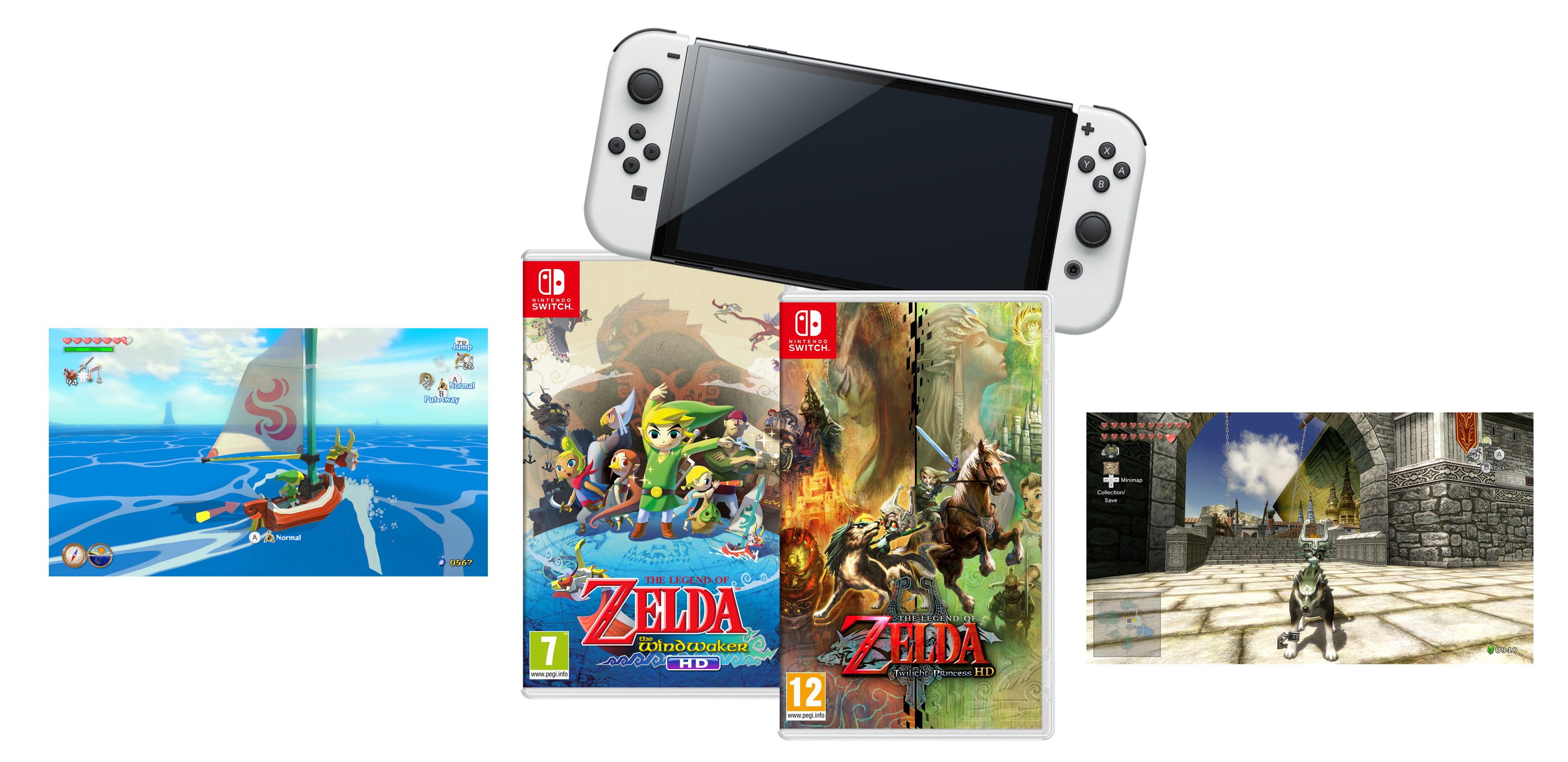
Nintendo Switch with fake box arts for The Wind Waker HD and Twilight Princess for the system

The Nintendo Switch will soon enter its eighth year and has the potential to become the best-selling video game system of all time, if Nintendo keeps it going for a little while longer. Still, they are with all certainty in the middle of preparing its successor and a number of new games for it, where it's even likely that any big titles that remain, like Metroid Prime 4, are going to be saved for the new system. In the meantime, Nintendo will tie us over with smaller titles, remakes, remasters, and ports, like Mario vs. Donkey Kong, or Luigi's Mansion 2 HD.

Now, this is going to be a wish list of ten titles, where I would still like them finding their way onto the Nintendo Switch, either for the sake of convenience or the sake of completeness. I will focus on games that can be either remastered or ported, meaning that they wouldn't need a from-scratch remake in order to look good enough. This essentially limits the choices to GameCube, Wii, Wii U, and Nintendo 3DS titles.

This can be anything previously published by Nintendo, so this won't just be about Zelda games. If you want to read more about those, check out my Future of Zelda Remakes & Remasters article, though there will be a bit of overlap here. Also, I'm perfectly aware that this post may look ironic, considering that I wrote this about six years ago. But times change and by now I really prefer having all games on my Nintendo Switch, where I rarely go back to my older Nintendo systems to play on them.


Luigi's Mansion HD

We're soon going to get Luigi's Mansion 2 HD for the Nintendo Switch, a remaster of the Nintendo 3DS title. The first game was brought onto the Nintendo 3DS as well in 2018 by GREZZO, where this could serve as the basis to later also have it remastered in the same style. With that we would have entire trilogy on the system.


The Wind Waker HD & Twilight Princess HD

These titles always have been such an obvious choice for ports from the Wii U that this kept coming up ever since the dawn of the Nintendo Switch. And after such a long time it's perfectly okay to take the last bit that the Wii U still has going for it. It would allow to play all 3D Zelda games on the Nintendo Switch, which is a big deal for those who don't own any older Nintendo consoles.

On the other hand, if Nintendo was willing to put more effort into these, then they would make great titles for the next console. Imagine Twilight Princess getting the same treatment as Metroid Prime Remastered – it would certainly make a lot of fans very happy if this were to happen over a simple port of the previous HD remaster.


Metroid Prime 2: Echoes Remastered

Speaking of Metroid Prime Remastered, it would be nice to see the sequel getting the same treatment, because it's really one of the best looking and most impressive games on the Nintendo Switch from a technical standpoint. This would serve as another filler in 2024, before we're finally getting Metroid Prime 4 and it could also be shadow-dropped in the same style as last year.

As a separate title once more, they could also put bigger focus on the multipayer mode, maybe even allow you to play it online for the first time ever. If Metroid Prime 4 also were to get multiplayer, this could serve as a play test, so to speak.


Metroid Prime 3: Corruption Remastered

At one point it will be nice to have the entire Metroid Prime trilogy on the Nintendo Switch in some form, but there may be a split here. If Metroid Prime 4 really is one of the first major games for the Nintendo Switch successor, then a remaster of Metroid Prime 3 might be something that they will keep for later, also making use of the better hardware. After all, there was a generational gap between the first two games and the third, even if it only was a slight one.


Wario Land: Shake It! / The Shake Dimension HD

This Wii game was the last entry in the Wario Land series, which is a shame, especially since it returned to its roots of Super Mario Land 3: Wario Land here, meaning that Wario won't transform whenever he gets hit by something. It is a hidden gem made by Good-Feel, the studio that would later make such cozy platformers like Kirby's Epic Yarn or Yoshi's Woolly World. Both of these got ported to the Nintendo 3DS as some of its last titles and maybe the Nintendo Switch will get a similar treatment from Good-Feel in its last years...


Donkey Kong Country Returns HD

Coming from Jump 'n' Runs and games made by Retro Studios, we move on to a combination of both, where they had revived the Donkey Kong Country series with two fantastic games. Donkey Kong Country: Tropical Freeze was already one of the first ports for the Nintendo Switch and it would be nice if its predecessor were to find its way right next to it. There was a Nintendo 3DS version, Donkey Kong Country Returns 3D, which added a couple of levels, better controls, and some helpful extras, but came at the price of the frame rate. A Nintendo Switch release therefore could become the ultimate version of the game.


Kid Icarus: Uprising HD

This was one of the early Nintendo 3DS games and the only "recent" game by Masahiro Sakurai that wasn't a Super Smash Bros. title. It was also the revival of the Kid Icarus franchise, which didn't last... But it had a number of barriers, where the biggest one were probably the controls. The whole AR card collection thingy, which was going on at the time, may also have been something to put you off. There have been rumors that Sakurai has been working on a remaster of this title, where this certainly would do it some good...


Xenoblade Chronicles X

Just for the sake of completion, to have the entire series on the Nintendo Switch, there's one more game to port over from the Wii U: Xenoblade Chronicles X. But if we're truly getting a "Xenoblade Warriors" this year, as I'm personally predicting, then this could also be something for later.


Metroid: Samus Return HD

Finally, after the success of Metroid Dread, MercurySteam may update their first Metroid title from the Nintendo 3DS for some quick cash. Well, they will probably go for another remake entirely, like Super Metroid or Metroid Fusion, or they are already working on Metroid 6. But in case that the assets for Metroid: Samus Returns already were developed in HD and only got downscaled for the Nintendo 3DS (which happened with other games, e.g. Super Smash Bros. for Nintendo 3DS), then a remaster would be a very good side project for the meantime and allow you to play this excellent game in the same glory as Metroid Dread.

Wednesday, March 8, 2023

Metroid Prime Remastered: Hopes for the Sequels

staring at a detailed wall made out of hexagonal basalt

Playing Metroid Prime Remastered makes you immediately want more, where we have no idea how far Metroid Prime 4 is currently into development. It still could take years to come out, but in the meantime fans and new players alike will certainly be happy with getting remasters of Prime 2 and Prime 3 to pass some of that time.

Naturally, there have been many rumors about this, where I don't want to address a particular one. But I do believe that Retro Studios has been working on remastering the entire trilogy, before they were re-assigned to Metroid Prime 4. They have finished the first game nonetheless, but remasters of the other two titles are either on hold or got outsourced, where it's possible that some of the many other studios involved with Metroid Prime Remastered are now working on them.

But we do know for a fact that Metroid Prime Remastered has been finished since July 2021 (see here) and there must be a good reason why they have been waiting over one and a half years to finally release it. Either they wanted it closer to the release of Metroid Prime 4 or they wanted to wait until the other remasters are taking shape. Of course they also didn't want it to collide with Metroid Dread, but there was no need to wait that long.

In any case, remasters of Metroid Prime 2: Echoes and Metroid Prime 3: Corruption should get the same level of detail as Metroid Prime Remastered. This is a very rare occurrence of a Nintendo title where the graphics are really the selling point. The game is simply a feast to the eyes and anything less for its sequels will result only in disappointment. They could just make remasters with upscaled textures, like it was done with Twilight Princess HD, but they really shouldn't.

staring at a sandstone wall with some metallic structures

Personally, I can't wait to see Agon Wastes or the Sanctuary Fortress with such detailed assets. The atmosphere of Metroid Prime 2 was amazing and the game had a "cleaner" look to it overall, where it would be a good match for the art direction of Metroid Prime Remastered. It doesn't really need much more for the second game in the Metroid Prime Trilogy, except that they should also simplify the menus to not use these rotating data bubbles. While it was very unique, it wasn't very convenient to use...

With Corruption I mainly hope that they will get rid of the credit and Friend Voucher system entirely and simply let people unlock the gallery contents in the same way as in Metroid Prime Remastered. Alternatively, they could turn the Friend Vouchers and some of the gold credits into ingame achievements, but I really wouldn't want to do "Flawless Escape" ever again.

On the other hand, without such a system there would be no real reason to hunt down the Red Phaazoids at all... But they could give you a better reason for this than just some virtual checkmark, where one simple idea could be that each of them increases your resistance to Phaaze.

The bumper stickers for your ship also will probably be removed entirely or at least updated to modern games. Would be cool to have a sticker based on Tears of the Kingdom, for example. But considering that they didn't even bother with the Fusion Suit, this feature is likely not to make a re-appearance.

And then there are the motion controls, where they need to be toned a bit to make the game work properly with a Pro Controller or in handheld mode. The novelty of throwing the Grapple Lasso with your Nunchuk or turning some devices with your Wii Remote got old quickly and never was fully reliable anyway. So, they should be looking at Skyward Sword HD here for how to do all this with traditional controls.

Both titles would also certainly profit from free button mappings. That's one of the few complaints that I have with Metroid Prime Remastered, where the many control options are very good, but not perfect. Just let the people fully customize the controls to be comfortable, where this also adds to the accessibility of the game.

Anyway, it will be nice to have the entire Metroid Prime Trilogy on the Nintendo Switch in the long run, but it shouldn't happen at all costs. They should give these games the same care as Metroid Prime, because they deserve it.

Sunday, May 3, 2020

2nd Person Perspective in Zelda (and Metroid)

3D video games are usually known for being played from a first person view or a third person view. Either you interact with the world from the eyes of your playable character or you watch your playable character from an outside camera, which can be still or locked to your character or even controllable.

The Zelda series even uses both methods, where you normally play in third person, but you can also switch into first person view to look around or aim with certain items, like the Hookshot or the Bow. In the Metroid Prime games it's actually the other way around, where you normally play in a first person perspective from Samus' eyes, but go into third person for certain actions, like the Morphball.

But what if I told you that there are instances where both Zelda and Metroid are offering a 2nd person view? And what's even a 2nd person view?

The different perspectives in video games stem from writing, where there can be three different point of views for the narrative:

  • 1st person: "I'm a hero."
  • 2nd person: "You are a hero."
  • 3rd person: "Link is a hero."

In 1st person the story is directly told by the main character or one of the characters in the story, while a 3rd person narrative is talking about all the characters from an outside perspective. But in second person view, which is quite rare, you're basically told by someone else what you're doing...

If we translate this to video games, you would view your playable character from the eyes of someone else. So, a second person view still is like a first person view, just that you're not playing as that person. And after watching a video about the 2nd person view in Driver: San Francisco, I had this little epiphany about how Zelda was using this unique perspective in a very memorable moment:

Toon Link being held by Clayk as seen from the eyes of the boss

It's the boss fight against Crayk in The Legend of Zelda: Phantom Hourglass. In this fight the boss turns invisible, but the second screen lets you watch the action from the perspective of the boss — which is a 2nd person view. You still aim with your bow on the lower screen, but you have to do it in a way that you're pointing directly at Crayk's face on the top screen.

It was truly an out of body experience and is one of the examples where Phantom Hourglass tried some really unique things with the hardware. The game isn't exactly a fan favorite, but you have to give credit where credit is due.

Of course, this use of a 2nd person view is more or less only suitable for gimmicks, like this particular boss fight, so it's probably not something where you would design an entire Zelda game around it. But it's still interesting to see how it can lead to some crazy interactions. And maybe this can be used for something more extensive in a future Zelda title.

So, what about Metroid? This is actually a simple one, because basically all classic first person shooters on consoles with a split-screen multiplayer, like for example GoldenEye 007 or Turok 2: The Seeds of Evil on the Nintendo 64, offer multiple 2nd person perspectives. Everyone's screen is a second person view except for your own and you can even use this to spot yourself in the action.

The Metroid series had this with Metroid Prime 2: Echoes, which came with a very traditional multiplayer mode:

In the above screenshot you can see how the two players on the lower screens are watching each other, probably in the middle of a fight. And this is where the 2nd person view comes into play. Part of the fun of these old couch-multiplayer shooters was basically cheating by looking at what your enemy is doing and where he's going.

It's a shame that there wasn't anything like it afterwards, but maybe Metroid Prime 4 will offer an interesting multiplayer mode as well, maybe even something that uses split-screen.

Sunday, May 20, 2018

Metroid Prime 2: Echoes Revisited


It's been a while, since I've revisited Metroid Prime on the Wii U, and Metroid Prime 2: Echoes actually followed right after, in November 2017. I've completed the "Veteran Mode" at the time, but since I've set the goal to finish all Metroid Prime Trilogy games in both the Veteran and Hypermode difficulties, I wasn't done yet.

But I couldn't muster up enough motivation to play through the game again right away and then Breath of the Wild happened, where I returned to the game for its DLC. It wasn't before now, half a year later, that I'm finally done revisiting the planet Aether.

So, this took me quite a while, which in all honesty doesn't speak for the game. Of all my replays and revisits in the last years, this one probably covered the longest time span due to the circumstances. The actual game time wasn't that long, though it took me a couple of hours longer than for Metroid Prime. So, mainly this was because I lacked the motivation.

It doesn't mean that I don't like the game, for the most part I even like it more than Metroid Prime, because it fixed so many issues that I had with the previous game. The first person platforming was toned down heavily, the visors are more fun to use and the ammo-based beam system really has some strategy to it, instead of simply matching the right color.

(Though you still do this with doors, where I would have preferred it, if these doors went normal after the first time, similar to the red doors that you have to open once with Missiles. Ideally, when you've explore everything, all doors should be normal for the sake of convenience and ammo savings. But that's nitpicking...)

Overall I still prefer it, when beam stacks like in Metroid Prime 3: Corruption and I don't have to worry much about ammo consumption. I would even argue that Other M did things best, where you can regenerate Missiles on your own and Hard Mode doesn't have any pick-ups at all, but the game still works fine. Metroid for me is the most fun, if I reach a point, where I run through the world blasting. Super Metroid has that, Other M has that and Samus Returns has that as well, which for me immensely adds to the replay value of these games.

But Metroid Prime 2: Echoes never really reaches this point. In fact you always feel kind of weak and enemies usually take much time and resources to be defeated. In Torvus Bog I keep running by the Grenchlers, because they are so annoying to deal with, even at the end. At least in Metroid Prime, where you had a similar enemy with the (Baby) Sheegoths, you could later one-shot them with the Plasma Beam, which is hugely satisfying. That's the kind of ingame development that I'm seeking from Metroid.

Echoes doesn't offer this, however. The Power Beam is the only thing that doesn't waste ammo and it feels too weak for the job from the start. Ammo stations would have been more important than ever, but they are scarce, so you often have to take the time to shoot stuff in the environment with your Dark and Light Beams to produce the opposite ammo.

And the Annihilator Beam at the end then feels like a massive disappointment, where it completely betrays all expectations created by its name and it's just not worth the high ammo waste. The only thing it annihilates are the Ing, when you use it on a light beacon or crystal, which draws them into suicide. But that only works on them and otherwise you're better off still swapping between Dark and Light Beam, which you both get early.

That's a good point, actually, because what the game lacks in endgame power, it makes up for a great beginning. I love Agon Wastes. For me it's the best and most satisfying part of the game. The atmosphere is great and it got the whole dark world feeling right, mostly because it's still the part, where Dark Aether hurts you badly and really feels claustrophobic. You also get many useful power-ups in this part, including Space Jumps, the Dark Beam, the Light Beam and the cool-looking Dark Armor. You have a nice face-off with Dark Samus and engaging the Space Pirates is a lot of fun here, while I always hated the Space Pirate parts in Metroid Prime.

I love the beginning of Metroid Prime 2: Echoes and Federation Force really should have followed this and Corruption for its design, instead of going into the ridiculous chibi optic. Then it might have sold some copies after all. Echoes even has the giant turrets that you can use to blast things in the environment and Space Pirates coming out of giant dropships. It just doesn't look as cute, which certainly helps, and if Federation Force was any cool, it would have stuck to the Trilogy aesthetics.

Anyway, it goes downhill from there. Torvus Bog has some really nice music, probably the best in the game, but that's as much as I'm willing to praise the area. Traversing it is not much fun and often even needlessly convoluted (especially in the Submerged Temple), you get the worst power-ups in the game and the enemies can be super annoying, mainly the aquatic Alpha Bloggs and the aforementioned Grenchlers. This goes so far that I prefer exploring Dark Torvus, because Dark Aether here actually feels much less threatening and even like a place, where I can rest and relax from the annoying swamps. And that's probably not how it should be...

The game also has some confusing back-tracking here, where I was stuck for quite a while, when I replayed the game last November in Veteran Mode. Overall the game is much more structured than it predecessors, which I've previously analyzed in my Worlds of Metroid article. Agon Wastes establishes the division into the three temple areas, where in one area you need to find entrances to Dark Aether, collect all three Dark Temple keys and fight the giant boss at the end of the temple in Dark Aether. It's as close to Zelda as Metroid probably will ever get. Thing is that you completely stayed within Agon Wastes and its dark counterpart for the whole time. And the areas in Dark Aether aren't connected at all, so you're really focusing on the one area at a time.

Now I thought that the same would apply to the Torvus Bog, but after acquiring the Boost Ball you actually have to leave the area and get the Seeker Missiles in the Temple Grounds. This isn't unusual for a Metroid game, but I simply didn't expect that during this moment and was stuck for a while, because I had the hint system deactivated and the game doesn't really leave any ingame hints for this. You have to remember that one half-pipe in the Temple Grounds and consider this as the way to proceed... Metroid Prime had also some parts, where it's not entirely clear how to move forward, but Metroid Prime 2: Echoes used back-tracking in a very obscure way.

The same happens during the Sanctuary Fortress, again after defeating a Morph Ball ability mini boss - the Spider Guardian. Now you have to remember that on bottom of the Submerged Temple there were still some magnetic rails that take you to a portal, which then leads to the Power Bomb Guardian. By studying the map there, it looks like the whole part is closed off by yellow doors, which need Power Bombs, and because I didn't remember it all too well, I was stuck again, wandering around the Sanctuary Fortress without any real clues what to do next...

And while I know that the Sanctuary Fortress has many fans, I'm not one of them. It's similar to Torvus Bog, where the music is certainly great, but it's not as much fun to play. Again it feels like the Ing Hive, the Dark Aether counterpart, is actually nicer and less threatening than the light world, where you're attacked by Ing Smashers one too many times. Those guys usually close all doors and take a lot of ammo to be defeated, which stops being fun after a while...

Other enemies in the area like the Quads or the Rezbits are also not to be underestimated and need exactly the right strategy, so that they are not completely annoying. The Quads want two Super Missiles to the head and then be destroyed with your Boost Ball or else they will annoy the hell out of you. The Rezbits want to be frozen with dark energy and then smashed with a missile or else they will annoy the hell out of you.

But the enemies that really take out the momentum of the game are the bosses. The temple bosses are all impressive, but they overstay their welcome far too long with their multiple phases. The Armobis fight was quite difficult in Hypermode, where it just keeps going and at the end you have three worms jumping around from all directions, which can cost you a lot of health. Luckily, there is usually a save station not too far away from the main bosses, which can't be said about all the Guardians.

The Spider Guardian is especially frustrating in that sense, because if you have to repeat the fight, you have keep going through the whole temple and Energy Controller part again, before you can do the fight again. Here I really prefer the system of Other M and Samus Returns, where you can start over from the beginning of a boss fight, in case you die there. The motivation to try again is a lot higher, if you don't have to go through the same set of rooms again and again and again, taking you out of the action and needlessly wasting a lot of time.

With the Spider Guardian this is even worse, because the whole fight takes a while with its puzzle nature and the real difficult part comes at the end. Whoever had the idea that making you jump right between two upward slopes in Morph Ball mode hopefully isn't working for Retro or Nintendo any longer. Problem is that the Morph Ball doesn't offer the necessary precision. You need to accelerate to go up the slopes and then stop right on top, but the ball usually keeps some momentum and then rolls down again. It's very tricky and frustrating. It's like playing Rollgoal from Twilight Princess in a boss fight situation. A good game never creates challenges based on its flawed controls, it should always hide the flaws as much as possible, which Echoes absolutely doesn't do during this part.

Curiously, I didn't have as many problems during my Hypermode run, I did it on first try there. And I mean trying the fight once without dying, since the last part still took me many attempts to get right. But once you figured it out, you can keep trying without taking (much) damage.

I can't say the same about the Boost Ball Guardian, however. It's kind of the opposite, where I barely managed him on my first try during my Veteran run and then took about two dozens of attempts in Hypermode. This fight just doesn't feel balanced at all and he used to be even more difficult in the GameCube version, imagine that! But my main problem was that I treated it like a Morph Ball fight, while you're better off jumping and shooting things, until the stalker soup appears that want to be attacked with Bombs... Anyway, at least you don't have to repeat half of Torvus Bog, in case you fail.

The Spider Guardian is also an example for another phenomenon in the game: Morph Ball platforming. What the game luckily lacks in first person platforming, it makes up for with its Morph Ball sequences, where some items might take a while to get. There's lots of jumping involved, where the Wii version's Spring Ball comes in handy, but the momentum of the Morph Ball doesn't only make the Spider Guardian tricky, but also some of the platforming sequences.

Anyway, after you're done with all bosses sans the final one, the fun will finally return. I really enjoy these scavenger hunts at the end of games, where you return to most parts of the world, which seemed to be a common thing among GameCube titles. The Wind Waker did with the Triforce Shards, Metroid Prime did it with the Chozo Artifacts and Metroid Prime 2: Echoes did it with the Sky Temple Keys. It's a great incentive to re-explore everything at the end with all your powers, though sadly in Echoes you don't grow too powerful, as already mentioned.

The back-tracking can also be quite some fun, because there are many items to discover, where Agon Wastes seems again like the most satisfying part. Lots to find there. By the way, I completely forgot about the teleportation between Energy Controllers with the Light Suit... It's not that useful, however, you might be using it once or twice for shortcuts during the final back-tracking part and that's it. But it's essentially the series' first attempt at Teleportation Stations.

It's also curious, how even the darkest parts of Dark Aether, where you find Dark Tallon Metroids, Phazon and Ingstorms, don't scare me as much as the Phazon Mines or the Impact Crater in Metroid Prime. It never has this uneasy feeling and I actually enjoy exploring the depths of darkness. But it's mostly because the enemies are not as annoying. For example the (Dark) Tallon Metroid are dealt with easily, unlike those nasty Fission Metroids.

There are also some parallels to Breath of the Wild in the game, mainly between the corruptions caused by the Ing and Calamity Ganon. In both cases you have some tentacle eye monsters, which seems to be a common theme in Nintendo games, because Phantom Hourglass did the same thing with Bellum. And you have guardian robots being corrupted by some dark goo, shooting lasers at you...

That's mostly it for the game and I probably won't be touching this ever again, until there's some HD remaster. But I'm looking forward to Metroid Prime 3: Corruption, where its Hypermode ability seems to be the right thing for me. Get blastin'!

Sunday, October 4, 2009

Metroid Prime Trilogy


You notice a good game, when you don't hesitate to buy it again for another system and have lots of fun replaying it. Metroid Prime Trilogy offers three of those games on one disc. By now I've completed all three games at 100% and unlocked all of the extras with the exception of the Corruption soundtrack and some minor artwork. And allthough I've already played the previous versions of all three games, it was a great experience.

Of course the most important addition is the new control scheme for both GameCube games. In Japan Prime and Echoes are simply part of the New Play Control! series, but luckily Nintendo of Europe and America decided to release the Trilogy instead. The upgraded controls are very simple, it's basically just the aiming via the pointer and flipping the Wiimote to activate the Spring Ball while being in Morphball mode. There are no other big motion controls like throwing the Nunchuk for the Grapple Lasso or interacting with the environment with your Wiimote in Corruption, but that's fine. And the controls make the games much more easier. You don't have to target everything manually, which saves time, and some of the Morphball puzzles get a lot easier thanks to the Spring Ball, best example is the Energy Tank in Transport Tunnel A in the Magmoor Caverns. Overall the difficulty of the first two games was reduced a little, the new "Normal Mode" is more like an Easy Mode. But since I have beaten the games on the GameCube, which was quite challenging for me, I don't mind this as well. This way I could enjoy the second trip through the games much more and I was able to focus more on getting a complete Logbook collection, which I haven't done before. And there's always the new Hypermode difficulty for all Metroid veterans.

If you beat one of the games, your save state for this game gets erased and you start over from the beginning. But all your Logbook entries are saved, so if you have completed your Logbook in your first playthrough, you get a 100% filled Logbook from the start and everything is pre-scanned, which makes replaying the games even more relaxing. And if you've missed something, you just have to focus on the missing parts and not on the other scans. It's basically like the 2nd Quest in The Legend of Zelda: The Wind Waker, where you keep your Minintendo figurines and where it's easier to finish your collection. And completing your Logbook can be a challenging task, especially in Corruption. There you have like 10 different, exotic Space Pirate types like the Armored Shield Trooper, that you can potentially miss. Every time you encounter Space Pirates, you basically swap to the Scan Visor first instead of blasting them to Pirate Hell immediately. Or the bosses in Echoes, where every single body part can be a different Logbook entry, can bother you as well. But I don't have to worry that about anymore, because my Logbooks are filled and they stay that way for the next time, when I'm going to replay these games. Nice.

The scans are also important for the credits. Both Prime and Echoes now use the credit system from Corruption for unlocking bonus content like artwork, a complete soundtrack, dioramas, a screenshot tool and extras like the Fusion Suit for Prime and the Ship Bumper Stickers and the Mii Bobble Head for your gunship in Corruption. However, the credit system for Prime and Echoes is much simpler than the one for Corruption. You collect orange credits for beating bosses in Prime and purple credits for bosses in Echoes. Additionally there are silver credits for collecting the Chozo Artifacts and Sky Temple Keys and for completing your Logbook. Completing both games once on any difficulty level is enough to unlock all the bonus content for the games including the Fusion Suit. Unlike for Corruption you're not forced to play through the games in Hypermode again or to trade those stupid, annoying Friend Vouchers (thanks again to RossMadden and Howser1994 from GameFAQs/Gamespot forums for trading with me).

All three games got a global main menu with a nice new music track using the pointer controls similar to the menu in Corruption. However, the ingame menus of the GameCube games and the menu of the multiplayer mode remain the same and don't use the pointer, Nintendo really should have updated those menus too. Additionally an option to swap the menu style would have been nice. The Japanese New Play Control! versions got their own new menus similar to the original menus from the GameCube versions, which could have been easily included. They could have added them as an unlockable bonus and it would have been nice to use the classic style menus, I love the menu and menu music in Prime. But it's not that important, just an idea.

The multiplayer from Echoes works fine, even with a small TV. However, some new leves and online functionality would have been awesome, but I'm happy that they didn't just simply cut it out alltogether.

Overall this is one awesome compilation, definitely one of the best videogame compilations ever next to Super Mario Allstars and Unreal Anthology. If you have missed out one of those games or more, Metroid Prime Trilogy is a must-buy for you. But getting the Trilogy is still worthwhile for someone like me, who has played all three games before. The new controls really add something to both Metroid Prime and Metroid Prime 2: Echoes and make these games even much better and more enjoyable than they were already.

If you're a Zelda fan and wonder, if you should get this, do it. Zelda and Metroid both share a similar Action Adventure core gameplay. In Metroid you will explore large, coherent worlds and collect new items to proceed into new territories. There are also lots of puzzles and hidden collectibles like Missile Expansions, Energy Tanks and scans, which will keep you busy for a long time.