Showing posts with label Previews. Show all posts

Monday, September 1, 2014

Preview: Hyrule Warriors

Hyrule Warriors logo

This preview was originally published on ZeldaChronicles (formerly known as ZeldaEurope) and got translated for this blog in 2022 by the same author.

After having the opportunity to play the Legend and Adventure Modes of Hyrule Warriors early, let's provide you with a spoiler-free first-look for the game. This preview will tell you how the battles unfold and what you can expect from Hyrule Warriors as a Zelda fan.

There won't be any details about the story or the missions, so you can read this article without any concerns. It's also aimed at Zelda fans who have never played any other Warriors game before, like Dynasty Warriors, Samurai Warriors, or One Piece: Pirate Warriors.

Let's start with the obvious: it's not a typical Zelda game, where you beat dungeons or solve puzzles, but it's primarily based on the Dynasty Warriors gameplay as known from Koei Tecmo – a strategic action game, where you fight your way through the battlefield as a one-(wo)man-army. This formula has now gotten a Zelda coating, creating some ripples amongst the fans.

In Hyrule Warriors different characters and places from the entire Zelda universe are brought together as fighters and battlefields in a war between good and evil. It's essentially a "Zelda All-Stars", where the gameplay of Dynasty Warriors was used as a platform to make it happen.


Into Battle!

The game puts you right onto the first battlefield around Hyrule Castle, where you will instantly notice the countless troops: a large amount of Bokoblins fights against Hylian soldiers and Gorons. But they don't feel like much of a threat when compared to their counterparts from Skyward Sword, which used to hit you all at once for some real danger, especially during that game's infamous horde battle. You will notice a swing here and there, but for the most part they simply act as harmless cannon fodder. This is part of the gameplay, however, and you quickly get used to taking out dozens of enemies in a single blow. Yes, it's even a lot fun.

Link attacking a group of Bokoblins with the Hylian Sword

More crucial to the battle are the various captains, which are stronger foes, like Lizalfos, Stalfos, Big Poes, or Moblins. They can take more damage and will also attack you directly, where a little bit more skill is required to defeat them. If you do so, this will also shatter their unit of smaller foes. Stronger enemies can be targeted and also have a health bar above them, which sets them apart (though you can activate health bars for every single foe via the settings).

The real stars are the commanders, however, who lead the battle and are the main characters of the game. This includes Link, who quickly rises from a recruit to the hope of Hyrule, the powerful Sheikah warrior Impa, but also Princess Zelda, who for the first time is presented as a capable fighter and leader. The troops of evil on the other hand are initially commanded by the dragon knight Volga, the dark mage Wizzro, and their mistress Cia.

The goal is often to take out the enemy commander of the opposing forces, who are in no way inferior to your own combat power. Because of this you get a mix of fighting through hordes of monsters like in Hack 'n' Slay and more classic duels. This goes even hand in hand, because the smaller foes will provide you with goodies for fighting against the stronger ones.

In addition, Hyrule Warriors also utilizes powerful bosses, like King Dodongo or Gohma. They appear more threatening than ever when they tear through dozens of troops with their gigantic claws. With their armored bodies they also take only very little damage from normal attacks, but you can expose their weak points with the right item in typical Zelda fashion, which lets you deal critical damage.
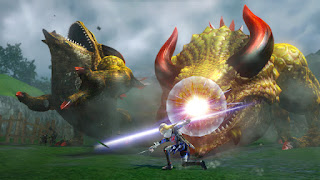
Sheik fighting two King Dodongos on Hyrule Field

These items include the Bombs, the Bow, Boomerang and the Hookshot. You will obtain them during the course of Legend Mode and keep them forever, which means that you will have them already in your inventory at the start of any upcoming battle. Items like the Bombs can also be used infinitely, so you don't have to search for any whenever a King Dodongo shows up or there some rocks in your way.

The power-ups for the items are temporary, however, which are sometimes dropped by defeated enemies or found in pot. The Power-Up Bombs for example let you blow up dozens of enemies at once, but only for a short amount of time.

Unfortunately, you're also the only character during the battle to be able to use these items. Other fighters are simply unable to fight against the big bosses or get past certain obstacles, which means that you are usually the key to victory. Without your help nothing much will get accomplished, so you can't expect your allies to get the job done for you, while you explore the environments in peace. They can be useful here and there, but this is the exception, not the norm, so you're the driving force for the most part. This can also be stressful whenever you have to be like at five places at once and then make strategic decisions about what requires your immediate attention and what may still wait a while.

For this you're also constantly communicating with your allies, no matter where there are on the battlefield. The fairy "Proxi" talks for Link, who is as mute as we know him, while all other characters can speak for themselves via text boxes. This creates an interesting atmosphere, where you feel like a part of a greater whole, but also like a real hero. That's something that Hyrule Warriors does better than most Zelda games, where the NPCs are usually more passive. You are fighting side by side with Princess Zelda and other characters, which is a rarity from the Zelda series that here becomes your daily business.


Collect & Conquer

All those troops, monsters, and commanders don't just run around aimlessly, of course, where there are keeps and outposts all over the battlefield, which want to be captured. The small outposts only consist of a small number of enemies and one easy-to-beat captain, where you only need to defeat said captain. But the outposts are taken back by the enemy as easily, where usually these points just act as a negligible distraction.
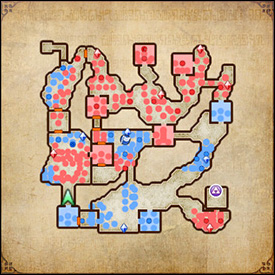
map of Hyrule Field

More important on the other hand are the Keeps – those are square-shaped fortifications all over the battlefield, which often act as crossroads between different sections of the map. Sometimes certain gates are even closed, so you have to take the keep before you can proceed. And that's not as simple as with the outposts, because the keep boss is initially hidden and only shows up after you've done a certain amount of damage on the other enemies inside the keep. Troops are constantly spawning inside them and the more you defeat, the more damage the keeps take.

Once the keep boss is fallen, the keep belongs to your side and your enemies will have to go through the same process. The game will even warn you when keeps are getting attacked and are about to fall. This is usually caused by assault troops, which are led by a bunch of captains, but your own armies can do the same thing. And the more keeps you have, the more troops you will get on the battlefield.

In the keeps you can find variety of different elements from the Zelda series, like Bomb Flowers, Beamos, and pots, where the latter may contain Rupees, hearts, or similar items. But the best thing are the treasure chests that appear in some keeps after capturing them, because in Hyrule Warriors every character gets a unique animation for opening chests, which is charming and sometimes funny.
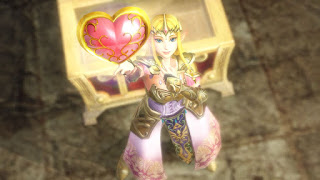
Princess Zelda raising a Heart Container from a chest

In some battles you also have a base, the Allied Stronghold – should this special keep fall, the battle is lost, so you need to defend it at all costs. Sometimes you have other conditions of defeat, where for example you can't let certain allies flee. You can easily heal badly hurt allies by going next to them (a ring is displayed around them in such a case), but you will have to get there in time. You can't be everywhere at once, however, where this leads to one of the main challenges of the game: a lot of fires can burn at the same time and you need to make swift decisions which ones need your immediate attention and where you can make sacrifices.

And on top of all that are sidequests... During the battle you may find Heart Container, Pieces of Heart, new weapons, and even Gold Skulltulas. The latter appear somewhere on the battlefield, where it only shows a radius in the form of a spider web on the map, after you have cleared a certain criteria, mostly defeating 1000 enemies. But the Gold Skulltulas will appear for a short amount of time, which can be very distracting when there are other urgent things to do.

For the other collectibles you can usually take your time, though, and find them while exploring the battlefield, something that most Zelda fans should enjoy. Of course it's not like in a Zelda game, where you can take your time to fish, while evil waits for you. So, you always need to have an eye on the battle and try to explore whenever the situation allows for it.

Strong foes also drop materials and weapons on defeat, where it plays the short, traditional "get item" melody each time. This is fun and invites you to run over the battlefield to collect everything, while enjoying the many "ta-da-da-da-daaa" sounds. The materials and weapons only appear in the form of small bags, where it shows you the real items only after the battle. These things will also be automatically collected at the end of each battle, so you don't actually have to collect any of them, unless you want to.


Battles in Hyrule

All the things to find are not the only (amusing) elements that have found their way from the Zelda games onto the battlefield. For example you may encounter gigantic Bombchus, which automatically go to their target and can take out obstacles or instantly capture keeps. There are also Cuccos, which act like a neutral army and can spell doom for you or your enemies.
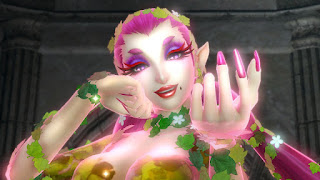
the Great Fairy luring you in seductively

Some stages have Fairy Fountains on them, where a Great Fairy (based on the Nintendo 64 games) waits for you and helps you out with dilemmas. And just like in a Zelda game you can cut grass to refill your life or magic.

So, even though the core gameplay is based on Dynasty Warriors, the battles in Hyrule Warriors are full of gameplay elements usually found in Zelda games, which adds a unique charme. And this makes it easier to get into the battles and over-the-top action of a Warriors game, even when those games are usually not your thing.


Controls & Combos

If you're accustomed to 3D Zelda games, then it will be easy to get into Hyrule Warriors, because the controls are in many ways similar. Koei Tecmo even offers a Zelda style button layout, where you dodge and interact with A, perform normal attacks with B, and strong attacks with Y, while the cinematic Special Attacks are triggered with X. The normal Warriors style is also there, where you attack with Y and X, but this preview will use the Zelda style as a reference.

In a Warriors game you use a variety of different "combos" to attack. But don't worry, this isn't like in fighting or other Hack'n'Slash games, where you have to perform crazy inputs, it's actually rather simple. You have a chain of normal attacks, where you just keep pressing the B button, just like you would in a Zelda game. Now, at any point during this attack chain you can perform a combo attack by pressing Y. This attack will be different depending on how many normal attacks you have performed before. So, pressing BBY will result in a different attack than BY or BBBY. It's simple to learn and also allows new players to just mash buttons and see what impressive actions will unfold. And experienced players will know what combo to use in which situation.

Defeating enemies and collecting Force Fragments will fill your Special gauge, which is right below your heart meter. With the X button you can then unleash a powerful Special Attack, which lets you target a large group of enemies at once. This even freezes everything around you, so you can use it safely.

A specialty of Hyrule Warriors is also the magic meter, which only fills by collecting Magic Jars. Those can be found in the environment or are rarely dropped by enemies. Once filled, you can activate "Focus Spirit" with the R button, where your attack power and speed are enhanced, which is especially helpful in duels against stronger foes. This will continuously drain your magic, but you can extend the duration by defeating lots of enemies. For every 25 K.O.s you get some magic back, as well as certain bonuses, like more Rupees or experience points.
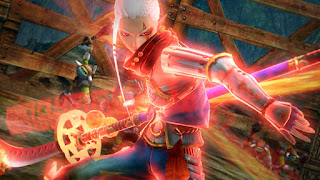
Impa with the Naginata unleashing her red Focus Spirit

During Focus Spirit you can press the X button to perform a different, more targeted Special Attack, which is will reveal the weak point gauge of an enemy. This will empty your magic meter, where it's best to wait until the very last moment. Should the magic extinguish on its own, then this will cause a large area attack around you. So, next to multiple combos every character has three different special attacks, which all look very cool.

Decisive against commanders and bosses is the weak point system, however. Whenever your enemy perform certain attacks, it will leave them vulnerable for a brief moment, which is when their weak point gauge appears. Once you reach the end of this gauge with attacks, you will perform a powerful weak point attack for massive damage. With the giant bosses, like King Dodongo or Gohma, this is even the only real way of dealing damage to them, where you also have to use a certain item to reveal their weak points in good, old Zelda tradition.

Impa fighting Volga

Zelda fans should also get accustomed to the rest of the controls fairly quickly. The left analogue stick lets you walk around and the right analogue stick turns the camera around, like in The Wind Waker. The ZL button lets you block, but it also centers the camera right behind you. Unlike other Warriors games, you can target enemies with the L button, so they will stay in sight, which works like in any 3D Zelda game. Of course not every small foe can be targeted, only the captains, commanders, and bosses, but that's what counts. You can also switch targets with the right stick.

Here's an over view of the complete Zelda control layout:

  • Left stick: walk
  • A: dodge, interact 
  • B: normal attacks
  • Y: strong attacks / combos
  • X: Special Attack
  • R: Focus Spirit (Magic)
  • ZR: item
  • L: targeting
  • ZL: block and center camera
  • Right stick: camera, change target
  • D-pad: swap items, zoom map
  • Plus: pause menu
  • Minus: switch between GamePad and TV

You can also play with a Wiimote and Nunchuk, but normal attacks will be performed by swinging the remote, similar to Twilight Princess on the Wii.


Characters and Weapons

The real appeal of Hyrule Warriors is without a doubt the diverse cast of characters. In this game you won't only play as Link, but with all sorts of different characters from the Zelda universe. Next to new incarnations of Link, Zelda, and Impa, there are also a couple of characters stemming from Ocarina of Time, Twilight Princess, and Skyward Sword, which get unlocked one after another.

Before each battle you get to choose your character and their weapon. Some characters even have different weapon types, e.g. Link can use the mighty Fire Rod instead of his typical sword and shield combo. This completely changes all of Link's attacks, where these weapon types are effectively a whole other moveset.
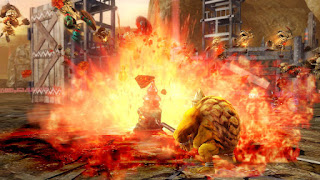
Daruna causing a fiery explosion with his hammer

Each weapon type also belongs to one of five elements: fire, water, lightning, light, and darkness. Here is a short explanation what they do:

  • Fire Attacks cause explosions, which blow away enemies and create mighty sparks, which can hurt even more foes.

  • Water Attacks create a bubble above the heads of your enemies for a while, which lets them continuously take some damage (like poisoning).

  • Lightning Attacks cause more damage when they hit enemies in the air – this often gets supported by attacks that launch enemies up.

  • Light Attacks cause more damage against multiple enemies.

  • Darkness Attacks cause more damage against single enemies.

Next let's take a look at some of the characters to give some examples:

  • Link (Hylian Sword): Link with his sword and shield is the perfect allrounder, where you can't really go wrong. His normal sword attacks deal decent damage in duels, while his different spin attacks are effective against hordes of enemies. For Zelda fans this is the perfect way of familiarizing yourself  with the mechanics.

  • Sheik (Harp): Sheik is an example for a more tricky character. Kunais get used for the normal attacks, while the combos create attacks for all five elements. Based on your previous combo an elemental note appears below your special meter, where your strong attack (Y) let's you play a song based on this element for different effects. For example the combo BBBY creates a lightning attack, where you then can play the Song of Storms, which will wrap you in a lightning cloud.

  • Daruna (Hammer): If you just want to smash, then Darunia is your man. His hammering is slow, but powerful for some good damage on every swing. Combos will unleash explosive and fiery attacks to give your enemies hell, but you will often be left vulnerable after them.

  • Fi (Goddes Sword): Fi is unique in her ability to attack while moving, which for example can be useful to attack Bombchus on their way. Her combos are also good against multiple enemies, where she can strengthen her attacks with light energy. She has a special light gauge, which can be filled with her strong attack move for a short while. But she isn't very good in duel against stronger foes.

These characters are all rich in variety, where every weapon type has its own gimmick, as well as different advantages and disadvantages. And it can be a lot of fun to give them all a try to discover your favorites, just like in a fighting game. Depending on the game mode and missions you can either freely choose between the characters or are restricted to certain ones...


Game Modes

You will battle in one of the three different modes: Legend Mode, Free Mode, or Adventure Mode (there will also be a Challenge Mode available in a free update after release, but this wasn't available for testing as of yet).

Your entry into the game is Legend Mode, where the story of the game gets told battle by battle, via cinematic cutscenes and beautiful storyboards. The latter are narrated by a real voice actress in English (with subtitles for other languages). If you're hoping for any more, then you will be disappointed, because Koei Tecmo stayed faithful to the classic combination of textbox and noises, which feels somewhat outdated here in Hyrule Warriors, but still works and his its own charm.

They certainly weren't skimping on cutscenes, where there's one for the beginning and end of each major battle. These scenarios fit the story quite well and offer also some replay value, where you will play through multiple times to find all extras, level your characters, or simply to revisit the story.

Legend Mode only lets you use the characters who actually were part of the story during the corresponding missions. If you want to play as any character, you can do so in Free Mode, where all of your unlocked fighters are available. The main fighter of the scenario will then follow you wherever you go, which can be unintentionally funny. For example you will do all of Link's work during the first battle on Hyrule Field, where he always arrived only after the dust has already settled.

Overall, the battles in Legend and Free Mode are focused on quality and replay value, so this is where the meat of the game is. But if you want more at the end, then Adventure Mode will have you covered, which is all about the quantity. It gets played on the map of the classic NES The Legend of Zelda, where each square stands for a mission. If you do the math, then that's 128 missions in total, which can keep you busy for a long time. This is also where you can unlock certain other characters, new weapon types, and stronger weapons, which can't be found in Legend Mode.
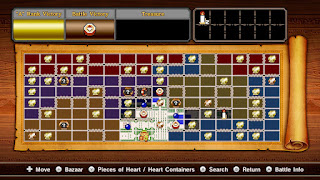
early Adventure Mode map with most of it still covered

More than half of the missions in Adventure Mode are "Challenge Battles", where you are (mostly) on your own and have to solve different tasks. For example you might have to defeat a certain number of enemies or bosses within 10 minutes. Some of these Challenge Battles are also pure duels without any hordes of monsters.

Then there are "Adventure Battles", which are similar to the battles in Legend Mode, except that there are no story restrictions. This means that everyone can fight against everyone, which may lead to some weird scenarios, but also gives you the opportunity to fight against certain characters, which you normally wouldn't have to face in battle (which also helps to obtain their materials).

Winning battles will score you "Item Cards", which are classic items, like the Compass, Bombs, or the Candle. These can be used on the Adventure Map to reveal hidden rewards, like new weapons. Bombs open caves and the Candle burns trees, just like in the original. The Compass will show you the right spots to use the items, where each Item Card can only be used once. If you use on the wrong spot, it will be wasted, but you can always get new cards from (re)playing battles, so there is an infinite supply.

If you're familiar with the NES original, you can even rely on your memories (or guide maps on the internet) to save yourself some Compasses. There are also new items and hidden secrets, which didn't appear in The Legend of Zelda for some new discoveries, but these are mostly obvious because of the fact.

Finished battles in Adventure Mode will receive a score with rank of either A, B, or C. To obtain certain rewards or proceed on the map at certain points, you will need to score an A rank. And for that you will have to finish the battle quickly enough, defeat a certain amount of enemies, while not taking too much damage. This sounds stressful, but is usually quite doable, as long as your characters have the right level... Which brings us to the last topic of this preview.


Shopping and Leveling

In games with multiple fighters, like Super Smash Bros. or Street Fighter, it's usually so that you unlock them one after another, maybe give them a try and that's it. Not so in a Warriors game. Here every characters has a long-term development, controlled by yours truly.

It already starts with the fact that each character gets their own heart meter. Every Heart Container and Piece of Heart that you collect goes to a certain character, where during battle you can only open such treasure chests with the right character.

You also receive more Heart Containers by leveling your fighters from 1 up to 99, which also influences your attack power. This can make the difference between life or death in certain missions, where something that may seem impossible at first can become much more doable with ten more levels to your name.

To level up you simply need K.O.s – every defeated foe earns you XP, similar to Zelda II - The Adventure of Link or most RPGs. Bur the Bazaar also contains a Training Dojo, where you can invest your Rupees into level-ups. Those costs can go into sextuple digits, but you will earn such sums eventually and it's useful to bring the characters up to speed who you don't play as often.

Badge Market, Stamina Fruit I: Makes the Weak Point gauge diminish quicker.

The Bazaar can be accessed after each battle via the plus button, where you have other ways of strengthening your characters in the form of a menu. One of those is the Badge Market, where you can unlock different perks for your characters. The badges are the same for every character, but you'll need different materials for everyone. Some of the abilities you unlock here are as important as your level, maybe even more so, like for example additional combo attacks or upgrades to your Special Gauge. The badges are split into attack, defense, and assist categories.

The strong badges will need rare materials, which can only be gotten from defeating boss monsters, where it can take quite a while to unlock everything. More common materials, like old rags from Bokoblins, can also go into the Apothecary, which lets you create Mixtures and Potions for different effects lasting for one battle. And those can also make you stronger or give you better loot.

Similar effects can be found on the weapons themselves, which are managed in the Smithy. You can collect up to ten weapons for every weapon type, where these have different attack values and slots for weapon skills. Those weapon skills can be transferred to empty slots on other weapons for some Rupees, where the price depends on the weapon and skills. You can also sell your excess weapons for some good money.

You usually obtain a variety of weapons during a battle, which come with random skills. Some skills are still sealed, where you will have to defeat a certain number of enemies with this weapon, before the skill becomes available. These are usually the better skills, but some of them also have drawbacks, so be ready for some surprises here.

All in all, you can invest a lot of time into boosting your characters and taking care of their weapons. It's actually so much that you won't mind any longer that the game "only" has 13 playable characters at launch, because this can keep you more than busy until more characters get added via updates and DLC.


Conclusion

The first impression of Hyrule Warriors is mostly positive. It feels like Dynasty Warriors and The Legend of Zelda were made for each other, where both sides get something from this fusion. The gameplay of Dynasty Warriors gets extended by various elements from the Zelda games, while Zelda fans get the opportunity to play battle in Hyrule with a variety of different characters. It's a win-win and Koei Tecmo took good care to make sure that the fans will feel at home in this new title.

Friday, October 25, 2013

Preview: A Link Between Worlds

artwork of the Master Sword in the Lost Woods with Mural Link on a stone wall

This preview was originally published on ZeldaChronicles (formerly known as ZeldaEurope) and got translated for this blog in 2021 by the same author.

Yesterday I had the chance to playtest The Legend of Zelda: A Link Between Worlds for ZeldaEurope.de at a press event in Berlin, the "Nintendo House Party". I played it for about three and a half hours, enough to test the first three dungeons and pay attention to many details in the game. My full German preview can be found here.

My overall impression is very positive. The game is everything Aonuma promised it would be. It's very open, there's lots to explore, there's nearly no hand holding, there are puzzles that can you get stuck, etc. It's also very addicting and should offer good replay value. Can't wait to play it again!

Read the fully translated preview below:


Sword Walk

After warming up with the two levels of the demo known from E3 and gamescom (the Tower of Hera and an overworld segment), I got handed over the full version of the game. The beginning was already skipped on the save file, which is why I can't really say anything about the intro, but I was more interested in trying as many things out in the available time as possible than I was in the story, anyway.

But the game starts at your house from where you go to the smithy, which like in the original sits right next to Kakariko. The major difference is that there is now a direct pathway between these two places. The smithy is run by a three-person family, which we already know from the artworks, as well as a dwarf, who swings the hammer, just like in the Super Nintendo predecessor. Link is some sort of apprentice and you get the task to bring it to the captain of the castle guards.

Since I wanted to experiment, I ignored my first task right away and walked that sword (which you can't use yet) all over Hyrule. And if this were Twilight Princess, Spirit Tracks or Skyward Sword, I wouldn't have gotten far with such a crazy endeavor...

But this is A Link Between Worlds and this game let me visit a huge part of the overworld, completely unarmed. I could go all the way around Lake Hylia, up to the cave where you'd originally find the Ice Rod. And I've ran into some monsters in the Lost Woods, where I had to retreat. But the game let's you go there anyway. There is no fairy popping up, telling you to go the other way. There are no artificial obstacles blocking your path. A Link Between Worlds returns to the freedom of the Zelda classics and this feels really great.

And it looks equally great at that. Even with the 3D on it runs smoothly in 60 frames per second, where everything looks quite nice. It's the good, old Hyrule from A Link Between Worlds, brightly polished and with actual depth perception. It's a true eye-catcher. And even if you turn the 3D off, everything looks very three-dimensional, which should be great for people, who can't play with 3D on or only own a Nintendo 2DS.

The controls are precise and as smooth as the visuals. The touchscreen gets used sparingly, for example to study the map, but everything else runs on the press of a button. And the slide pad works really well. However, if you want to use the d-pad instead, you'll notice it's only there to shift the camera around. This is useful for looking around, but might be disappointing for those who like the simpler input. 


Of Gravediggers, Merchants and Princesses

After exploring Hyrule for a bit, it was time to continue with the story. A guard at the castle gate points you towards the Sanctuary, where you meet Dampé, the gravedigger known from the Nintendo 64 Zelda games, but also the blue-haired maiden Seres, who gets trapped by the androgynous villain Yuga inside the Sanctuary. So, Boris tells you to make actual use of your sword and find the back entrance of the church at the graveyard.

Fans of A Link to the Past will probably remember that there was a second entrance to the tunnels, which connected Hyrule Castle with the Sanctuary, at the graveyard. And indeed you will find one under one of the tombstones, leading into the dark sewers full of rats and bats (Keese). This is where you find the lantern, which actually doesn't use up the new Energy Gauge. That bar isn't even there yet in the beginning of the game.

Well, the lantern brings light into the darkness and lets you light the torches all around, where the game's charming visuals create a nice atmosphere here. It's also where you get to fight enemies for the first time, which works as smoothly as everything else. Overall the tunnels are quite different from the Super Nintendo version, where you also can't go into Hyrule Castle from here any longer. But it's about as straight-forward and ends with the same classic puzzles, where you have to pull one of two levers.

Afterwards you'll meet Yuga at the Sanctuary, who abducts Seres by turning her into a painting. And as Link tries to fight Yuga, he literally runs his head against a wall...

You then wake up in Link's house, which is where you meet Ravio for the first time, the mysterious merchant in a bunny costume. This character seems quite funny and charming, but there is also something evil about him. It feels a little bit like the Happy Mask Salesman, where it was hard to figure him out. But this connection might also be raised from the fact that Majora's Mask is hanging on the walls of Link's house. You don't really know how it got there, but it's certainly an interesting detail.

Ravio suggests to report the incident to Princess Zelda, which brings you back to Hyrule Castle. Funnily, the outer castle walls got vandalised with graffiti of the evil soldiers that you know from A Link to the Past. The castle guards are trying to clean this up, but without success... This might already give you a bad feeling, but you can enter the castle safely for now.

On the outside this place is pretty much the same as in A Link Between Worlds, but the inside might remind you more of the castle in Spirit Tracks. There are training guards everywhere and the side entrances lead to their quarters.

Zelda in A Link Between Worlds

After an argument with one of the guards, Impa grants you an audience with the princess. In the halls before the throne room you will find the five pictures, which already got released as artworks and tell the stories of how a past hero and the seven sages sealed the evil Ganon. While it's all very familiar, in detail it doesn't really fit after A Link the Past, nor after Ocarina of Time, because Ganon got sealed here (and not destroyed) and the Seven Sages don't include Zelda in this story... But before I really could come up with new timeline theories, Impa tells me that Zelda is waiting.

The princess is very charming and lovely, like in Skyward Sword. And the next destination gets set right away: Sahasrahla in Kakariko Village.


Shopping in Kakariko

Last weekend I've played through A Link to the Past again to refresh my impressions about the game, so I can make comparisons to its successor without being blinded by nostalgia. And one of the best parts of A Link to the Past was leaving the Sanctuary, where the world of Hyrule lies at your feet. You can go almost everywhere and get many items, especially in Kakariko. This is where the game really draws you in.

A Link Between Worlds is in no way inferior to this, where Kakariko is also a place with lots to discover and obtain. There is now a Milk Bar in the southeast of the village and the owner looks quite similar to Talon. The building is decorated with a cow and there are milk canisters everywhere. And if you get thirsty, you can already find a bottle, as well as the Bug-Catching Net. Like on the Super Nintendo, you can catch bees with it and put them into a bottle, where there is also a place to sell for them 50 Rupees. Easy money.

If you want to spend this money right away, then there will be a shop waiting for you in the northwest of the village. It offers a shield, as well two fruits, which are new to the series. The "Foul Fruit" stuns enemies around you (but I haven't really tried this) and the "Scoot Fruit" lets you teleport out of a dungeon, basically as a replacement for the Magic Mirror. Thanks to my bee selling business I could already afford all of these items and fill my inventory quite a bit.

Another item was waiting at the Fortune Teller north of Kakariko. This is where you get the Hint Glasses, which lets you see Hint Ghosts. With these glasses on the environment gets darkened and the music damped, which might remind you of the wolf sense from Twilight Princess, especially since it lets you see ghosts as well. These ghosts wear glasses themselves, read books and share their wisdom for cash – not Rupees, however, but the Nintendo 3DS Play Coins.

I've only tried this feature once, right at the large rock behind the Fortune Teller's tent. The ghost told me which item is required here, which I won't spoil, but A Link to the Past veterans can already imagine.


Eastern Palace

Sahasrahla tells you the game's backstory about Ganon and the Seven Sages again, where he's afraid that Yuga might be after their descendants. He sends you to the Eastern Palace to look for one of these descendants, before it's too late. You won't be getting far there, however, because a gate secured by a classic crystal switch is blocking the way, where you can't reach the switch with your current items. But the pillars with a bow symbol on top of them will give you a clear hint of what you need here...

And this is where Ravio comes in, who wants to open shop in Link's house – an item rental shop. The bow will be a free sample and you also get Ravio's Bracelet as a gift, which adds the Energy Gauge to your screen. All of Ravio's items use this, where now one shot with the bow won't cost you any arrows, but a part of the gauge, which then refills automatically after a short cooldown.

On the compound of the Eastern Palace the usual enemies will be waiting for you. Fast Octoroks, which will fire in different directions. Armos statues, which will become alive, once you get near them. And also Tektites, where their high jumps look especially impressive with the 3D on. Compared to A Link to the Past the enemies feel a lot smoother and you also don't have the problem that the enemies might just run into you for some frustrating hits. It's more pleasant to fight foes, but this might also make the game a little easier.

At the entrance you'll meet the descendant of the Sages, who also seems to be one of Ravio's customers. He has the item looking like a fancy shovel – the Sand Rod. You probably won't be getting this item until later in the game, because the Sand Rod gets put together with the guy into a painting by Yuga and abducted.

Sand Rod Artwork

And this is where you get into the first dungeon, the Eastern Palace itself. The Tower of Hera dungeon from the demo was very linear, so I was afraid that the other dungeons might be similar. In the past ten years Nintendo developed a preference for linear dungeon design, which I personally find to be quite boring. A good dungeon feels more like a maze and has optional parts to explore.

The Eastern Palace took some of my worries, however. There were usually multiple paths to take and when I arrived the end of the dungeon, there were still three bigger rooms unexplored and a couple of treasure chests left on the map. This is quite the unusual picture for a total Zelda nerd like myself, but a picture to my liking. It seems like Nintendo wasn't just oriented towards the classic overworld, but also the classic dungeons. 

One of the main aspects of the dungeon were platforms that can be altered in height, which makes good use of the 3D effect. But of course there also had to be the huge iron balls, which you need to dodge and which look even more dangerous in 3D. And the classic music of the Hyrule dungeons from A Link to the Past sounds better than ever during all of this.

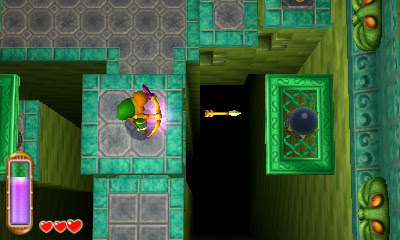
Link shooting an arrow from an elevated platform at a crystal switch

The first boss wasn't the set of the giant Armos Knights, however, but your first battle with Yuga, who uses his ability to turn into a mural quite well to avoid Link's attacks. He also creates paintings on the wall, which will cause bursts of lightning and fire. Good use of the bow and sword are needed to finish this battle quickly and without harm.

And here it's time to nitpick somewhat, because the aiming with the bow wasn't to my liking. In Phantom Hourglass and Spirit Tracks you could perfectly aim in all directions and you would assume that they would offer something similar with the slide pad of the Nintendo 3DS. Instead Link moves around while aiming in the same direction, where you also only can fire in eight directions.


One Bracelet to rule them all

When things are looking bad for Yuga, he turns Link himself into a mural and disappears... But what he didn't anticipate is the power of Ravio's Braclet: it turns you back to normal and even gives you the ability to turn into a mural at any time (whenever there's a smooth wall).

Through a rift on the wall of the boss chamber you'll be able to get outside, where you'll learn this new ability in an impressive way on the outer walls of the Eastern Palace. There are also some purple jars, which will refill your Energy Gauge instantly. It seems like this is the part, where you can get to all those treasure chests and rooms that I've missed earlier, but I decided to proceed in the adventure instead.

Mural Link on the outer walls of Eastern Palace

Yuga's next target is Princess Zelda and Hyrule Castle gets shrouded in a dark barrier, where the demonic soldiers now come out of the walls and occupy Hyrule. And while the enemies so far seemed somewhat easier when compared to their Super Nintendo counterparts, the soldiers are more dangerous than ever. Especially those that are using a lance are hard to fight with a sword, where you can't be shy with using your bow. You also have to actively shield with the R button, which makes fights a little bit more interesting.

The fights are also somewhat more realistic, where the soldiers are actually able to hurt each other, for example with their arrows. And it's fun to experiment here and try to lure one enemy into the line of fire of the other, where the combat is more engaging than it used to be in A Link to the Past.

Like in A Link to the Past, you'll get the Pendant of Courage at this point in the game and you're tasked by Sahasrahla to find the other two. One is located in Hera's Tower again, but the other is at an entirely new dungeon. You'll need new items for both of these, where it was time to pay Ravio another visit.

Link in Ravio's shop

At the time I could only rent his items, where the prices vary between 20 and 100 Rupees. The ones for 100 Rupees are the Fire and Ice Rods. Boomerang cost 50 Rupees, the Hammer only 20 (this was a discount). Since I had more than 700 Rupees in my wallet, I decided to simply rent ALL of the items. And yes, this is possible with one exception: the Sand Rod went away with the person you met earlier and therefore is not available right now.

But my item menu got expanded by seven additions at once go: Bombs, Boomerang, Hammer, Hookshot, as well as the Tornado, Fire and Ice Rods. I've only really needed the Hammer and the Tornado Rod for the next dungeons, but you have to take what you can get. And this is how I already got to enjoy almost all the items right from the start, which is a lot of fun.

The rented items have purple bunny ears attached to them and this is also where the role of Ravio's little bird-like companion gets explained: if you die, then it will collect all the items. I never experienced this myself, but there were some close calls, where the first half of the game is quite similar to that from A Link to the Past. And this gives you hope that the game will get a lot tougher later on.


Realm of Possibilities

While the game was already quite open up until this point, now it shifts up a gear. Not only are there two dungeons waiting for you, the many items in your inventory let you discover something new in every corner.

The Bombs for example let you open up caves in many places, including the one for Mother Maiamai. 100 of her little fellows are hidden in the world from now on and you can conveniently check on your map how many Maiamais are left for every area. And they can hide everywhere. Behind houses, in jars, in trees, under water...

Usually you just hear their squeaky noises around, but it's hard to tell where it's exactly coming from. It's like a mix of the Secret Seashells from Link's Awakening and the Gold Skulltulas from Ocarina of Time, two of my favorite collectible quests.

And it's certainly worth it to collect the little animals. Mother Maiamai will upgrade one of your items for every ten Maiamais. But only if they aren't rented. While I already was able to collect ten of them, I wasn't able to purchase items from Ravio yet... And I couldn't find out when Ravio let's you purchase the items for real. Maybe you have to die once, maybe this happens after a certain point, I don't know.

While searching for the Maiamais you'll start to take a closer look around all over Hyrule. And this is where Link's new mural ability starts to shine, because the shifted perspective offers a variety of new discoveries. For example there are paintings of Rupees and Hearts at the backside of houses, which you can now collect. And there are some funny details, like Majora's Mask hanging on the wall in Link's house. If you merge right there, it looks like Link is wearing the mask...

The GameBoy Advance version of A Link to the Past also wasn't forgotten by Nintendo, where the sparkling Rupee Rocks re-appear in this game. Those will scatter Rupees all around them, if you hit them repeatedly with the sword.

Since Rupees are very important in this game, you will be able to find them pretty much everywhere. There are even new mini dungeons in the Eastern Palace area and next to the graveyard, where you can score bigger amounts of Rupees. And you often find treasure chests in the environment, which will take good use of all your abilities. But sometimes they only contain 20 Rupees or even less, which seems somewhat unbalanced, considering how quickly you can make many from selling bees. It doesn't seem worth the effort.


Even More Items

With all these new toys and discoveries it's easy to forget that there are two red markers on your map, urging you to explore them. Ravio's arsenal of items isn't enough to get to these dungeons, however, where you'll also need the Power Glove and the Zora's Flippers respectively. The latter aren't as easy to get, because you have to find a stolen gem, which prevents the Zora queen from getting fatter and fatter. But this also shows that there are some items that you will still obtain traditionally.

On your adventures you'll also run into the flying witch, Irene. There was a similar character in Oracle of Ages & Seasons with Maple, where you'd literally run into her, but Irene in this case is a little friendlier and acts as this game's teleport service. She gives you the Bell, which can be rung from the bottom left corner of the touchscreen to call her. This flying broom taxi then takes you to one of the weather vanes all over Hyrule, which works very similar to the Wind Crests in The Minish Cap.

The weather vanes have to be activated first and they also are the only way to save the game, similar to the Bird Statues in Skyward Sword. And that's a shame, because with a handheld game you'd want the ability to save at any time.

Link at his house with a weather vane next to it

I was also able to find a second bottle, which had a message inside, reminiscent of Ocarina of Time. With that I already had 15 of the 20 item slots in my inventory filled. Assuming that there will be two more bottles to find, as well as the already sighted Sand Rod, this means that there are only two unknown items at this point. So, it feels very weird to have such a wide arsenal so early in the game. But weird doesn't necessarily mean bad, where this is also quite exciting. It's fun to try all the items and see what you can do with them.

It's not like you need all these items already, however. Hookshot, Boomerang, Ice Rod and Fire Rod aren't really required for anything at this point and are only there to play around with. They probably will be more relevant later in the game, though.


House of Gales

Since I had already played the Tower of Hero in the demo, I decided to head for the completely new dungeon – the House of Gales. It's some kind of windmill house at Lake Hylia, which Nintendo also showed in one of the trailers. If you're wondering why the journey didn't go to the Desert Palace: the desert is entirely sealed off this time with no way in. My best guess is that the desert works the other way around to A Link to the Past and you'll only get there via a portal in the Dark World / Lorule. We'll see!

But what's more interesting than the mystery of the desert is the new dungeon. You'll need the Tornado Rod to get in, where the item creates a gale, which blows you up and stuns enemies around you. You can also put out fire with it. The Tornado Rod essentially acts as a key for the dungeon, so you can't even enter the place without it.

And on the inside the item will be used in a variety of ways, where it's easy to forget that there's also the new wall merge ability. Eiji Aonuma wasn't exaggerating when he said that you might get stuck in the game because of it, which happened to me twice in this dungeon. You have to think outside the box and this creates some fresh puzzles for Zelda, which were much needed for the series.

Mural Link in the House of Gales

The boss of the dungeon was quite impressive as well. It was some kind of moving pillar with an eye on its top, which tries to push you into the abyss. The battle is a lot of fun and looks incredible in 3D, where this was a creative and perfect finish for the dungeon.


Summiteer

My left thumb hurts, my stomach is growling. There is a buffet on the Nintendo House Party waiting, as well as nice people having fun with titles like Wii Party U or Super Mario 3D World. But I couldn't just put down A Link Between Worlds yet and throw myself into the fray. The game was just too much fun and there was still a lot to explore, where I've decided to climb Death Mountain as well.

And for the first time since A Link to the Past this area lives up to its name. Spectacle Rock is now an active volcano shooting lava rocks down at you, while rolling rocks reign over caves. The latter can be destroyed with the Hammer or dodged by turning into a mural. But some of the rocks also have Rupees on them, which get dropped when you destroy them.

The "Deadrocks" also return, which are these fast enemies, which turn into solid stone when you attack them. Overall Death Mountain is an area full of dangers and Link's new mural form gets used cleverly to walk along the cliffs.

Mural Link on the cliff sides of Death Mountain

After all these obstacles you will eventually reach the west peak of Death Mountain. And I've decided to look around a little bit more, before going into the Tower of Hera, where I noticed that I can use the Hookshot to reach the east peak as well...

And this is where a long forgotten concept of the Zelda series awaited me: enemies as obstacles! Lynels, the centaur-like creatures, which do a lot of fire damage, greet you there, posing a huge threat at this point in the game. While they force me to retreat, it's an exciting encounter, because it's been a while that a Zelda game dared to do this. The newer games usually played it safe.

If A Link Between Worlds were anything like that, you wouldn't even be able to get the Hookshot, before you are strong enough to face the corresponding enemies. But A Link Between Worlds lets you test your own limits and offers a bit of that RPG aspect that the Zelda classics had. It's refreshing and also interesting for experienced players seeking a challenge. And this is much more memorable way for the game to tell you to turn around than some abyss that you can't cross just yet.

The Tower of Hera seemed to be identical to the demo level. Since I had already played this just earlier, I tested that new Scoop Fruit to exit the dungeon part-way. When jumping back to the entrance the screen then gets pixelated, similar to using the Magic Mirror in A Link to the Past, which is a nice detail.

But overall I found it more interesting to explore Hyrule a little bit more, collect some Maiamais and enter caves. I would have loved to take the game right home with me to continue all this, but I had to say goodbye to it and with it to my save file. Once I get the game myself, I will have to play it all over again from the beginning...

And if this was Spirit Tracks, Twilight Princess or Skyward Sword with their slow and tutorial-heavy starts, I would have dreaded the thought of repeating the first three hours. But not so in this case. The beginning is so well made and offers so much freedom that I'm looking forward to playing it all again. A Link Between Worlds could become one of those Zelda games that has the right amount of replay value, inviting you to play it again from the beginning. And we didn't have such a Zelda for a while.

One thing was clear: once you have the game, you won't be putting away that Nintendo 3DS anytime soon. Thanks to Nintendo and Popular PR for the invite! It was a lot fun and I'm really looking forward to the game.

Tuesday, October 18, 2011

Skyward Sword Hands-On (both Demo and Full Version)


This preview was originally published on ZeldaChronicles (formerly known as ZeldaEurope) and got translated for this blog in 2021 by the same author.

Today I joined Evelyn Jade from ZeldaEurope.de on a Nintendo press event in Berlin. We got to play both the E3 2011 demo, which was showcased in the lobby, as well as the full version of Skyward Sword, where we actually played the game for over an hour, which was enough time to get familiar with everything. And here are my impressions.


The Demo

Some of you might already have had the opportunity to try the demo themselves (like on this year's gamescom), but for me it was the first time, which is why it was still interesting to give it a try. Most of it should be known already, where the demo is divided into three levels and there's a time limit of ten minutes.

The first level is the "Wing Ceremony", a flying mini-game, where you have to catch golden bird to obtain a Bird Statue. I haven't played that one myself, but my colleague succeeded valiantly, where it didn't look all that easy. But I preferred playing the dungeon, the Skyview Temple, where you can just do as you please and play around with five of the later items, including the new Beetle.

One of the first things I tried was using the Beetle to activate the crystal switch on top of the central complex, which scores you a hidden Piece of Heart. The Nintendo PR guys were quite impressed by me starting things off like that, because most people trying the demo will miss this secret, but of course I simply knew about this from watching videos of the demo before.

The Beetle controls similarly to the plane in Wii Sports Resort. And the same goes for the bow. Overall, once you take the Wii Remote and Nunchuk into your hands, you feel great and powerful. The controls are very intuitive and it's a lot of fun to take the sword into your own hands, swinging it at the various enemies.

The highlight among them is certainly the battle against the Stalfos, who isn't a pushover. You have to react quite quickly to use the gaps in his defense. Often he changed the position of his swords right when I was about to hit him. It's challenging and I like that. One of your best moves is of course the classic Spin Attack, which you can unleash rather swiftly by moving both the Wii Remote and the Nunchuk at the same time.

Both of us also tried the battle against Ghirahim, who just like the Stalfos knew how to pose a threat. This is where you might want to learn how to shield properly to not be hit by his projectiles. The shield gets triggered by moving the Nunchuk forward, similar to the Shield Bash in Twilight Princess.

But since the demo isn't exactly news, so let's move on to the interesting part...


The Full Game

Nintendo advised us to start a new save file to play from the beginning, but I insisted to pick the game up from where the players before us left off, which let us skip the tutorial phase and gave us access to the forest area right away. We only had about an hour and I really wanted to play in the Faron Woods, where this turned out to be a good decision and I met my goal. And not having seen the beginning also has the advantage that I can't really spoil the story for you.

The save file put us on Skyloft, but we were already ready to leave the sky island, where we had the "Goddess Sword", the Sailcloth and the Hero's Bag (Adventure Pouch). The latter is used for storing shields and bottles, where in the beginning there are only four slots, but you will be able to expand it to eight slots, just like in the demo. My first goal was to fill one of the pouches with a shield, because it might prove itself useful in the forest.

It didn't take us long to find the Bazaar, a place crawling with odd fellows. But with not much money in our pockets, we had to realize that we couldn't even afford the Wooden Shield for 50 Rupees. So, it was time to farm some Rupees, which didn't really work too well just by cutting grass.

But around a small lake with beautiful water effects we found a dark cave, full of Keese and Chuchus, where the latter now have monstrous face and bite onto you. That's new and therefore it was quite surprising. To free yourself you have to wiggle the Wii Remote and Nunchuk. But after beating a series of foes and discovering a treasure chests, we were able to buy the shield and set off for the forest.

Flying to the green beam, which marks the landing spot for the forest, was considerably short. In less than 30 seconds we were at the destination, where it doesn't seem like you have to be afraid of long, and boring tours, like in The Wind Waker or Spirit Tracks.

We then  landed at the Sealed Grounds, a spiral crater in the middle of the forest. It's close to where I wanted to be, but the gate to the woods was closed, of course, and a couple of Deku Babas were greeting us, giving me some trouble. Like with the Stalfos, it's not so easy to hit them in the right angle with the right timing. You need a little bit of practice, but the sword beams turned out to be a safe way of taking care of these evil plants. You have to hold your Wii Remore upwards for those "Skyward Strikes", where Link points the sword towards the sky to charge it.

Charging the beam takes somewhat too long for my taste, but I suppose that this will be shortened later in the game, e.g. by the Medals. We weren't able to learn anything about them, other than the fact that these are a new collectible. But from what we were told, it sounded like something similar to the Magic Rings from Oracle of Ages & Seasons, which boosted certain effects. The sword beam was also useful to activate a switch at the center of the Sealed Grounds, opening the way.

We met an old women inside the temple informing us about using the blue beacons. You can place them on any point on the map and this will create a blue beam into the sky, which you can see from everywhere. Combined with the "Dowsing", where you can use your sword to find things, it's quite the useful element for navigation.

And navigating the landscapes of Skyward Sword might not be that easy, where they aren't as linear and simple as in previous Zelda games. The forest area was already known from last year's E3 demo, where the full game has changed and extended things. Overall it's quite the spacious areas, but also has its nooks and crannies, where it's easy to get lost and it can take a while to learn the environment. There are also many things to discover, distracting you from your main goal.

In this case you had to find three cute, little forest dwellers, the so called "Kikwis", which are hiding in different ways. The first was behind one of the many colorful mushrooms, always staying on the other side, where it looked funny how he moved around. Another was hiding in the grass, where you had to cut it all for him to give up.

They are in hiding, because they are scared of the Bokoblins and confuse Link as one of them. Earlier we've also met a Goron archeologist, who got attacked by multiple Bokoblins as well. This was reminiscent of certain scenes in the Capcom Zelda games, where you had to save Impa in Oracle of Ages and Ezlo in The Minish Cap from Octoroks. And this probably isn't a coincidence, since the director of these Zelda titles, Hidemaro Fujibayashi, was also directing Skyward Sword, where you can clearly feel his influence.

While looking for the Kikwi, something funny happened: a Guay (one of the crow enemies) approached and pooped on Link's head! You then have to shake it off by wiggling your controllers, similar to the Chuchus, or else you can't really move in the stench. This was so unexpected and hilarious, I actually let the Guays do it all over again just for fun. And these kind of surprises is what makes Skyward Sword feel quite fresh compared to previous titles.

Other than Bokoblins and pooping crows, there are also some kind of new enemies: small spores that stick onto you. These are similar to the "Morths" from The Wind Waker, but unlike them they are ticking bombs, where you have to shake them off quickly, before you take damage.

We also had the chance to study the inventory for the first time, which can be opened with the "1" button. It has two pages, where you should be already familiar with the one for the treasures and insects. But the gear screen is quite interesting as well. At the center is the Adventure Pouch, which only had our Wooden Shield inside. But there are many open slots, including something that resembles the slates for the Rail Map from Spirit Tracks.

One thing I really liked was the sprinting. With Zelda games you had this silly habit of rolling all over the environment, because it was faster, ever since Ocarina of Time. Letting Link run faster on a button press feels a lot more natural and the Stamina Wheel regenerates quite quickly, where you can doing these bursts of momentum. Running at something also lets you climb, which takes some getting used to, because Link did this automatically in previous titles. But it feels intuitive after a little while.

And while running all over the Faron Woods, I ultimately managed to find all Kikwis and get to their chief... However, we didn't get the chance to find out what happens next, because our session ended at this point. Still, experiencing the playground of the forest left quite an impression already.

In summary, this was a great evening and we want to thank Nintendo for the opportunity again. Skyward Sword looks great and has a lot of potential. It seems like Nintendo tried to combine aspects of all the different Zelda games, while mixing things up with the new motion controls and some fresh ideas. The 18th of November can't come fast enough.